
A newly discovered cave in Bueng Kan province has a surface resembling the scales of the legendary giant Naga snake.
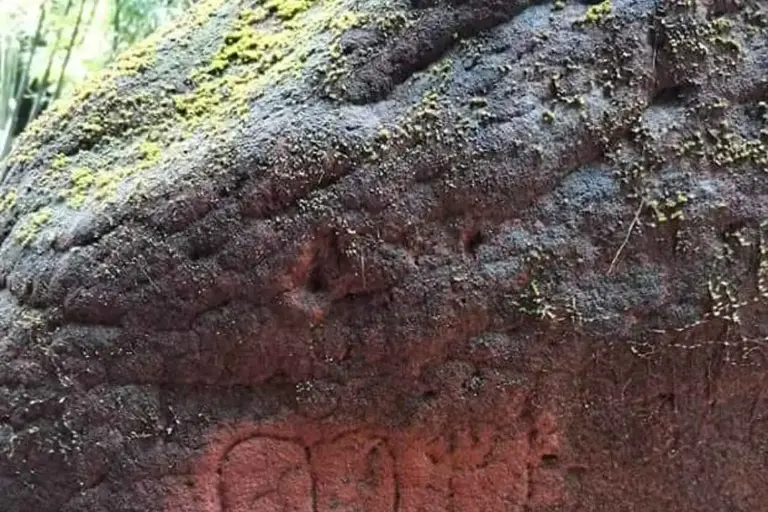
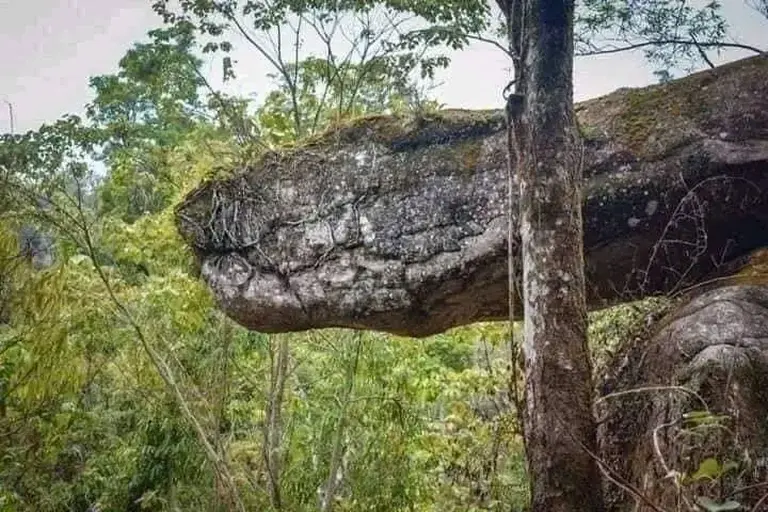
In May, a Facebook user named Ord Thanawanij posted some photos of the cave in Bueng Khong Long district, Bueng Kan province, over 700 km away from the capital city Bangkok. What quickly made this cave famous is its resemblance to the giant Naga snake from the legend. The surface of the cave is also rough, resembling snake scales. Additionally, the entrance of the cave has a shape similar to a snake’s head.
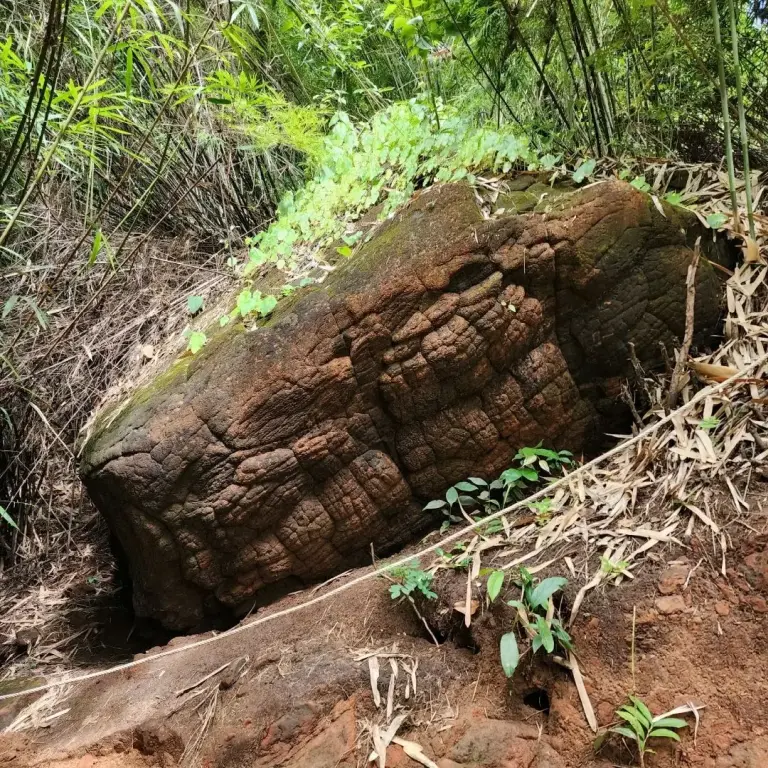
Thanawanij’s post was widely shared, and the legend of the giant Naga snake once again became a hot topic in Thailand. Some believe that this is the entrance to the mysterious city of Pu Ua Lue, where the Naga snake is believed to be cursed.
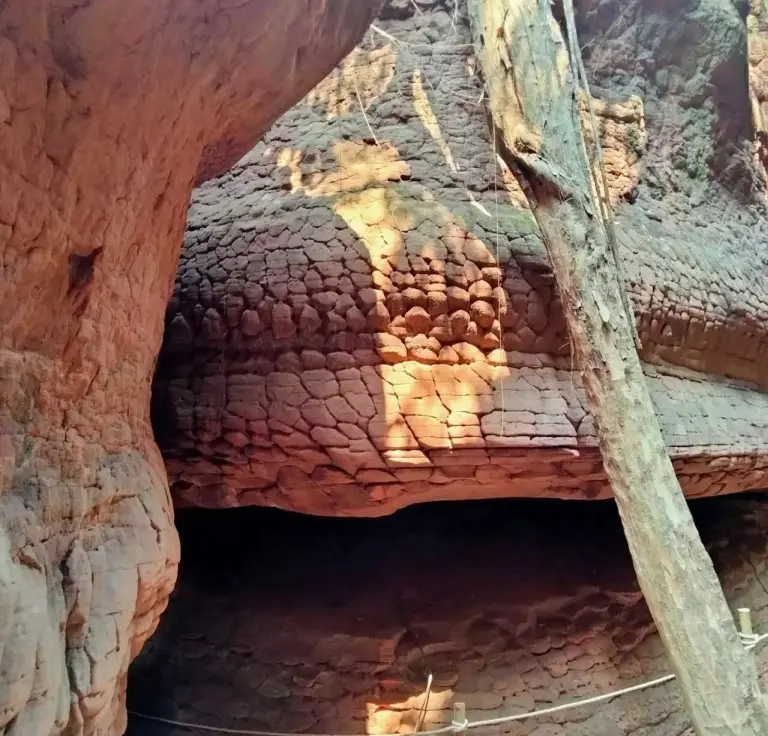
The Public Relations Department of the province quickly commented on this snake cave. Officials confirmed that the photos showing the snake’s head and body do not belong to the same cave. The snake’s head belongs to a rock cave in Oudomxay province, Laos. The cave with the snake-scale resemblance is located in a forest area within Phu Langka National Park, Bueng Khong Long district, Bueng Kan province, about 700 km from Oudomxay.

The area where the cave was discovered, as shown in the photos, is difficult and treacherous to access. Due to Covid-19, Phu Langka National Park does not allow visitors. They mentioned that they will organize guided tours in the future when the pandemic is under control.”
Giant Snake-shaped Cave in Thailand – FAQ
1. What is the Giant Snake-shaped Cave in Thailand?
The Giant Snake-shaped Cave is a natural cave formation in Thailand that remarkably resembles the shape of a massive, coiled snake. Its curving passages, segmented rock walls, and serpent-like silhouette have made it one of Thailand’s most visually striking and mysterious geological features.
2. Where is the Giant Snake-shaped Cave located?
The cave is located in a limestone karst region of Thailand, an area known for dramatic rock formations and hidden caves. While its exact location is not widely promoted, this limited exposure helps preserve its raw and untouched environment.
3. How did the cave get its snake-like shape?
The snake-shaped appearance was formed naturally over millions of years through water erosion, tectonic movement, and limestone dissolution. The winding tunnels and curved chambers gradually evolved into a form that closely resembles a giant serpent.
4. Is the Giant Snake-shaped Cave a real place or a myth?
Yes, it is a real geological formation, not a legend. However, its unusual shape and limited accessibility have fueled myths, folklore, and online speculation, blurring the line between science and storytelling.
5. Why is the cave associated with snakes in Thai culture?
In Thai folklore, Nāga (mythical serpents) are powerful guardians of water, caves, and the underworld. Many locals believe caves resembling snakes are spiritually significant and protected by these ancient beings.
6. Can visitors enter the Giant Snake-shaped Cave?
Some parts of the cave are accessible to visitors, but guided exploration is strongly recommended due to uneven terrain, narrow passages, and low light conditions. Certain sections may be restricted to protect the cave’s structure.
7. Is the cave safe to explore?
The cave is generally safe when explored responsibly, but visitors should be cautious of slippery surfaces, sharp rocks, bats, and limited ventilation. Wearing proper footwear and using professional guides greatly improves safety.
8. What is the best time to visit the Giant Snake-shaped Cave?
The best time to visit is during Thailand’s dry season (November to March), when water levels are low and visibility inside the cave is better. During the rainy season, flooding may limit access.
9. Why has the cave become popular on social media?
Photos and drone footage highlighting the cave’s snake-like silhouette have gone viral on social platforms, sparking global curiosity and debate about whether the formation is natural or symbolic.
10. Does the cave look like a snake from every angle?
No. The snake-like appearance is most visible from specific viewpoints or aerial perspectives. From ground level, the resemblance becomes clearer when light and shadows emphasize the cave’s curves.
11. Are there legends or supernatural stories linked to the cave?
Yes. Local legends suggest the cave is either the resting place of a giant serpent spirit or a sacred gateway guarded by Nāga. Some visitors report strange sounds, unusual echoes, or an overwhelming sense of presence.
12. Is the Giant Snake-shaped Cave officially protected?
Many caves in Thailand fall under natural conservation laws. While not all details are publicly documented, visitors are expected to follow strict environmental guidelines to prevent damage.
13. Can photographers and drone operators visit the cave?
Photography is allowed in most areas, but drone usage may require special permission depending on local regulations. Natural lighting inside the cave offers dramatic photo opportunities.
14. How does the cave compare to other famous caves in Thailand?
Unlike well-known caves such as Tham Luang or Phraya Nakhon Cave, the Giant Snake-shaped Cave stands out for its distinct symbolic shape rather than size or historical structures.
15. Why is the Giant Snake-shaped Cave considered mysterious?
Its rare formation, limited documentation, cultural symbolism, and viral imagery combine to create an aura of mystery, making it one of Thailand’s most intriguing hidden natural wonders.
16. Is the cave suitable for adventure travelers?
Yes. The cave appeals strongly to adventure seekers, explorers, and geology enthusiasts looking for less commercialized destinations.
17. Should tourists respect any cultural beliefs when visiting?
Absolutely. Visitors are encouraged to show respect for local beliefs, avoid loud behavior, and never remove rocks or markings from the cave.
18. Why should the Giant Snake-shaped Cave be on your Thailand travel list?
Because it offers a rare blend of natural artistry, cultural symbolism, and mystery, making it an unforgettable experience beyond typical tourist routes.