
In the beliefs of many ancient kingdoms, the arrival of a new year was closely connected to agriculture and natural phenomena rather than a fixed calendar date. Seasonal changes, harvest cycles, and cosmic events often determined when a new year truly began.
In the modern world, January 1 is widely recognized as a time for celebration—a moment to say goodbye to the old year and welcome a fresh, promising one. Yet for ancient civilizations such as Egypt, China, and Babylon, the concept of New Year’s Day was deeply rooted in farming rhythms, religious rituals, and the forces of nature.
Ancient Egypt and Persia
For the ancient Egyptians, the New Year was marked by the annual flooding of the Nile River, which usually occurred in mid-July. This life-giving flood signaled the start of a new agricultural cycle and coincided with a festival known as Wepet Renpet, meaning “the Opening of the Year.” During this time, people took part in feasts and sacred religious ceremonies to honor the gods and celebrate renewal.
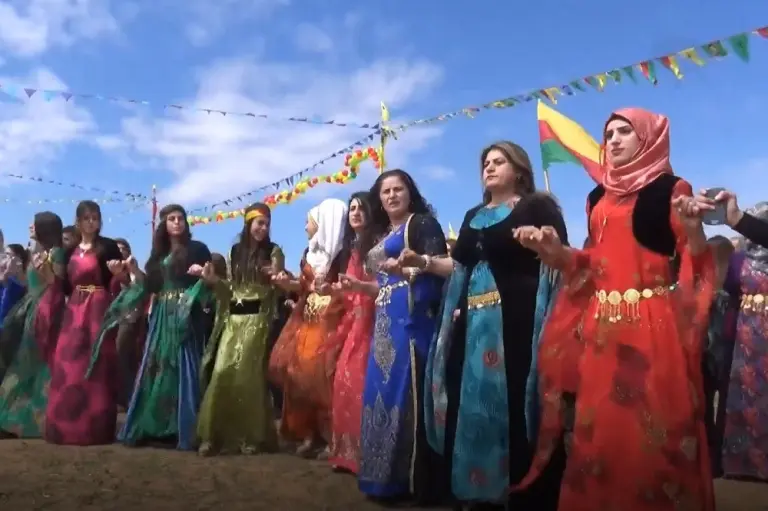
Meanwhile, in ancient Phoenician and Persian societies (modern-day Iran), the New Year was celebrated in March. Historians from Ancient Origins note that the Persian New Year festival, known as Nowruz (or Norooz), traditionally lasted 13 days. Although written records of Nowruz only date back to the 2nd century AD, scholars believe the festival itself began as early as the 6th century BC. Many Nowruz traditions—such as fire-jumping rituals and decorating eggs—are still practiced today in Iran and parts of the Middle East.
China and East Asia
In many Asian countries, including China, Japan, Korea, and Vietnam, the Lunar New Year remains the most significant celebration of the year.
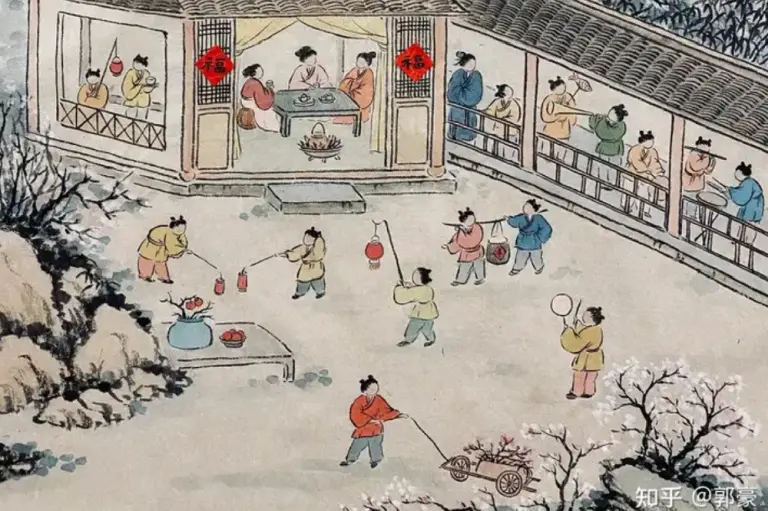
According to historians at Ancient Origins, the earliest evidence of the Lunar New Year in China dates back more than 3,000 years to the Shang Dynasty. At that time, the festival was closely linked to the start of the planting season, when farmers prepared to sow their crops.
Ancient Chinese Lunar New Year traditions were also shaped by the legend of Nian, a mythical beast said to terrorize villages at the start of each year. This legend explains the long-standing customs of decorating homes in red and setting off firecrackers. Families would gather to make dumplings (jiaozi), welcome the first visitor of the year at midnight, perform lion dances, and take part in various festive activities.
Mesopotamia and Ancient Babylon
Although the Lunar New Year has a long and rich history, it is not considered the oldest New Year celebration ever recorded. Historians believe that the Akitu festival in ancient Mesopotamia and Babylon (present-day Iraq) dates back more than 4,000 years.
The Akitu festival lasted 12 days, during which statues of ancient gods were carried through city streets in ceremonial processions symbolizing the triumph of order over chaos. Through these rituals, people believed the gods had purified and renewed the world—preparing it for the coming year and the return of spring.