
The tips below are drawn from common field experience and from patterns often seen in venomous species. Treat them as reference clues, not absolute rules—there are exceptions.
1) Observe the snake’s behavior around humans
- If a snake immediately tries to flee quickly when it notices people, it is often non-venomous.
- If it coils up defensively, flattens/expands its neck (when applicable), or moves slowly and confidently, it is more likely venomous.
Key Physical Signs (with important exceptions)
Eyes (pupil shape)
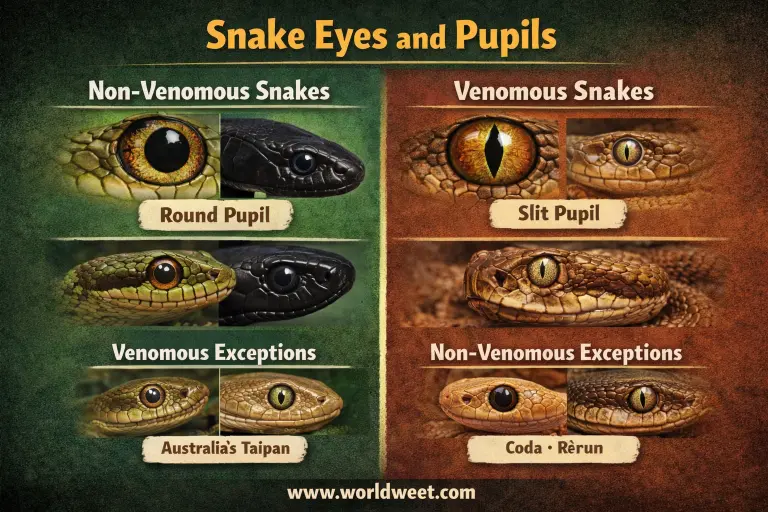
A commonly cited cue is the pupil (the black center of the eye):
- Many non-venomous snakes have round pupils.
- Many venomous snakes have vertical, slit-like pupils.
But this is not foolproof. Some highly venomous snakes (examples often mentioned include black mamba, cobras in some regions, and Australia’s taipans) can have round pupils. Also, a few non-venomous species may change pupil shape depending on light or stress.
So even if the pupil looks round, do not approach—check multiple signs and keep your distance.
Heat-sensing pit (between eye and nostril)
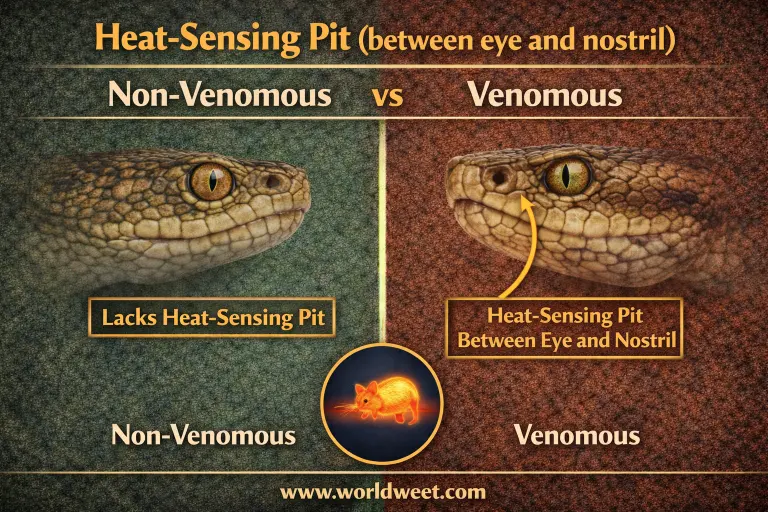
Many venomous pit vipers have a small pit between the eye and the nostril. This is a heat-sensing organ used to detect warm-blooded prey.
Tail scales (underside pattern)
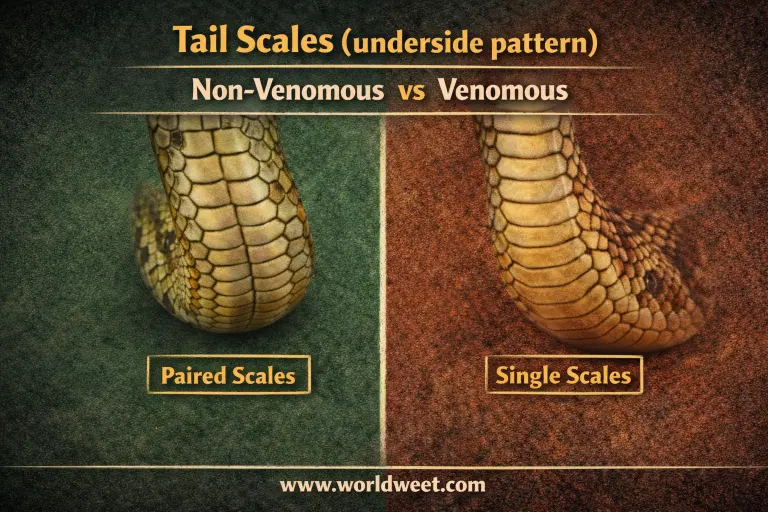
Looking at the underside of the tail, venomous and non-venomous snakes may differ:
- In many venomous species, the tail scales are arranged as single plates in a single row.
- In many non-venomous species, the underside tail scales may appear paired in a pattern resembling two columns.
(Again, species vary—use this only as one clue.)
Head and body shape
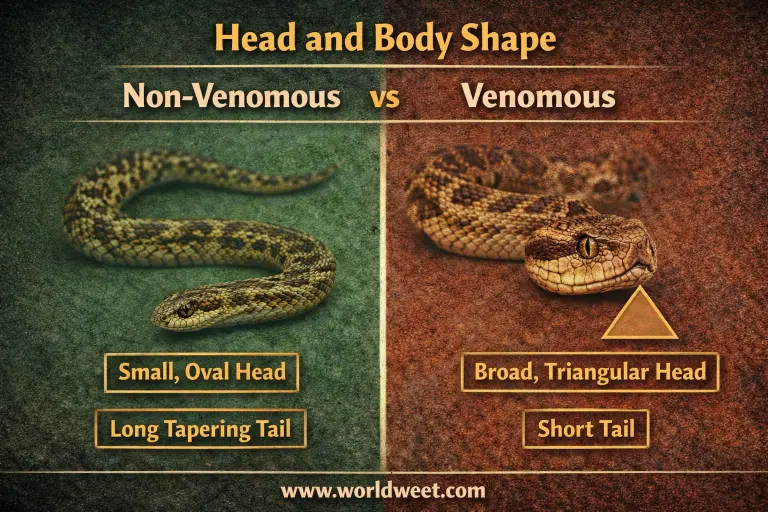
There is no perfect “one look” rule, but people often note these tendencies:
- Many venomous snakes have a broader, more triangular head, a narrower neck, and a shorter tail; patterns may look more pronounced.
- Many non-venomous snakes have a smaller, more oval head and a longer tail that tapers gradually.
However, some dangerous snakes have heads that don’t look triangular, and some harmless snakes can appear triangular-headed, which is why relying on head shape alone is risky.
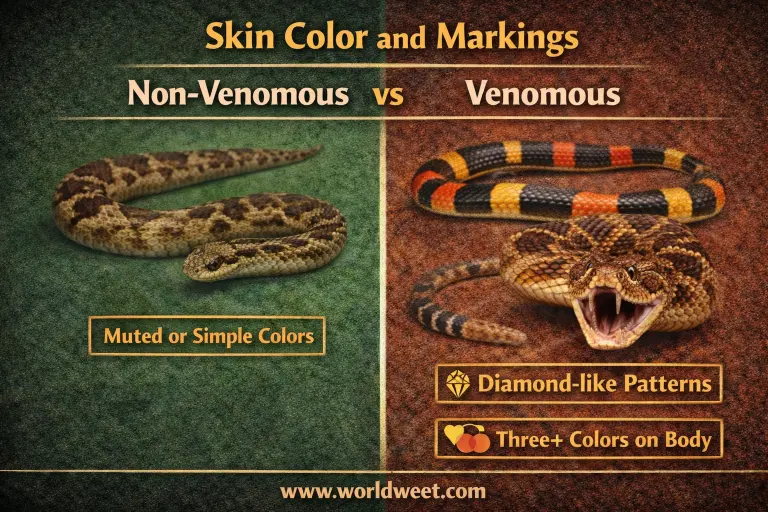
Skin color and markings
A common (but not universal) observation:
- Venomous snakes may have striking, high-contrast colors and can produce a distinctive hiss.
Markings sometimes associated with venomous species include:
- Diamond-like patterns
- Three or more prominent colors on the body
But color varies a lot in nature, so treat this as a supporting hint only.
Special note: water snakes
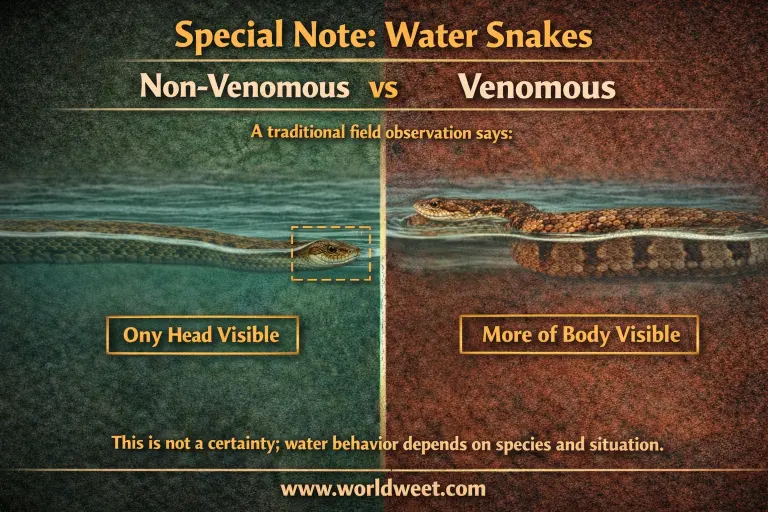
Not all water snakes are harmless—some are venomous.
A traditional field observation says:
- Venomous water snakes may float with more of the body visible above the surface.
- Non-venomous ones may keep most of the body submerged, with mainly the head above water.
This is not a certainty; water behavior depends on species and situation.
Using fangs and bite marks (more informative)
If a snake has venom-delivering fangs, it is venomous. Fang types are often described in two main categories:
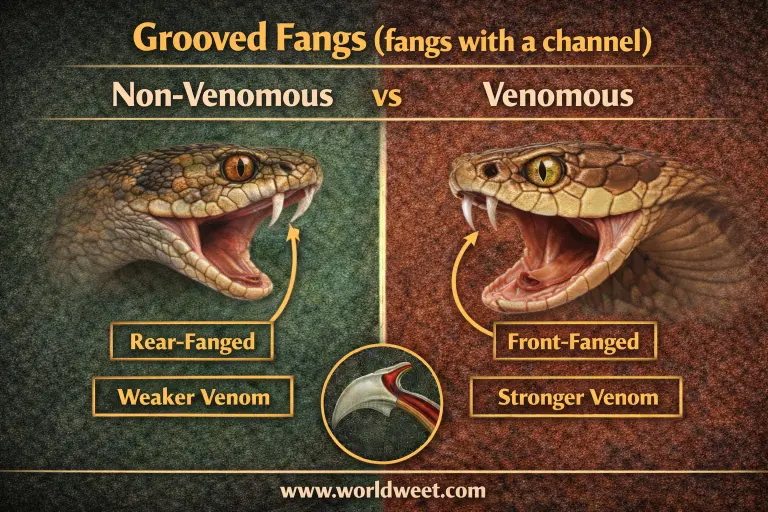
1) Grooved fangs (fangs with a channel)
- Some snakes have grooved fangs that guide venom along a channel.
- In some species, these fangs are located toward the front of the upper jaw (often associated with stronger venom in well-known groups like cobras, kraits, and many sea snakes).
- Others have grooved fangs set further back in the mouth (rear-fanged species); their venom is often weaker and bites are less likely to be fatal—though still potentially dangerous.
2) Hollow “needle-like” fangs
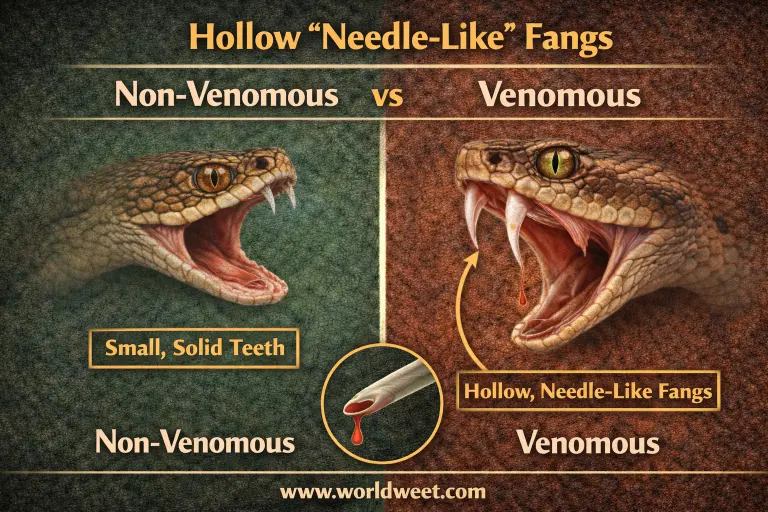
Another common venom system uses long, slightly curved, hollow fangs like tiny needles. Venom flows through the hollow interior into the wound when the snake bites. Many vipers and related groups are described this way.
3) Reading bite marks
Bite patterns can sometimes help:
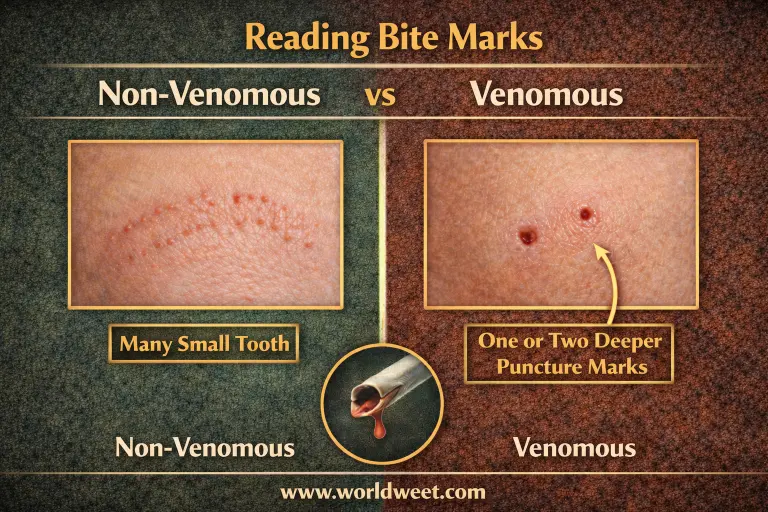
- Venomous bites often leave one or two deeper puncture marks (from fangs).
- Non-venomous bites more often show many small tooth marks in two rows.
Do not try to examine the wound closely in the field—seek medical care.
Signs that may suggest a venomous bite
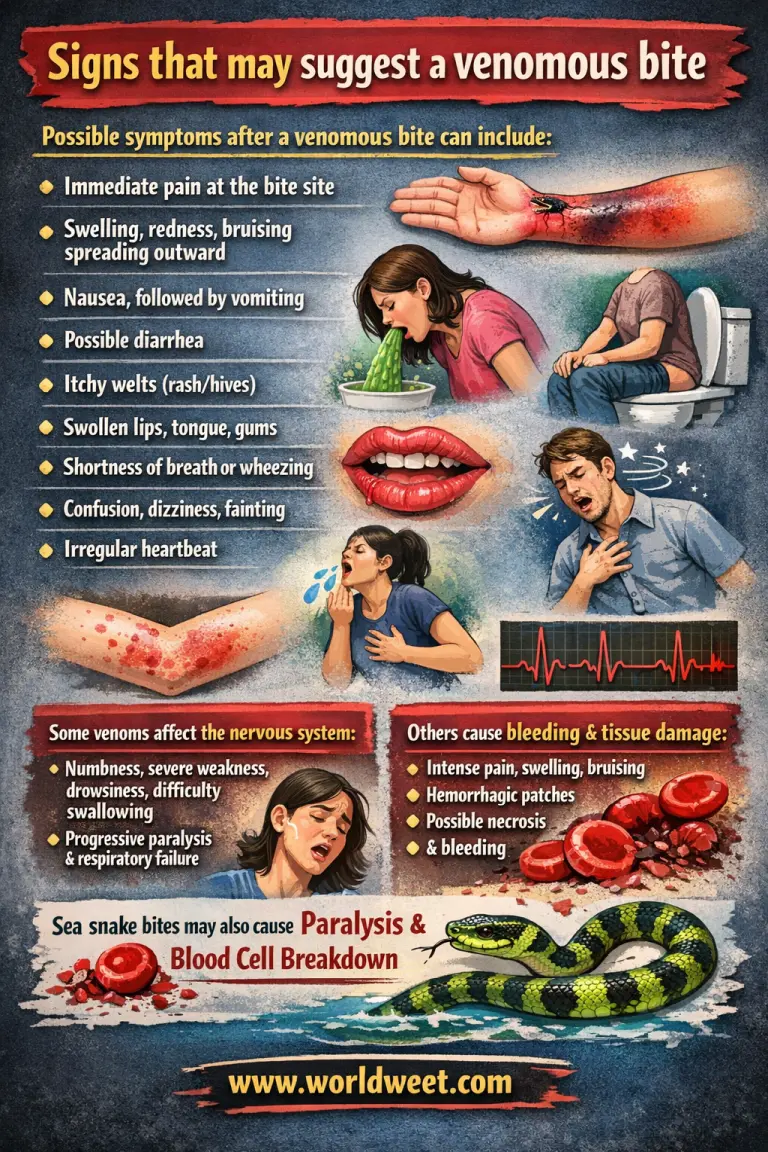
Possible symptoms after a venomous bite can include:
- Immediate pain at the bite site
- Swelling, redness, bruising spreading outward
- Nausea, followed by vomiting
- Possible diarrhea
- Itchy welts (rash/hives)
- Swollen lips, tongue, gums
- Shortness of breath or wheezing (asthma-like)
- Confusion, dizziness, fainting
- Irregular heartbeat
Some venom types affect the nervous system, causing numbness, severe weakness, drowsiness, difficulty swallowing, and progressive paralysis—potentially including respiratory failure.
Others primarily cause bleeding and tissue damage, with intense pain, swelling, bruising, hemorrhagic patches, and possible necrosis. Severe cases may involve bleeding from the mouth or in stool.
Sea snake bites may also produce paralysis-type symptoms and blood cell breakdown (hemolysis).
What to do if you’re bitten by a snake
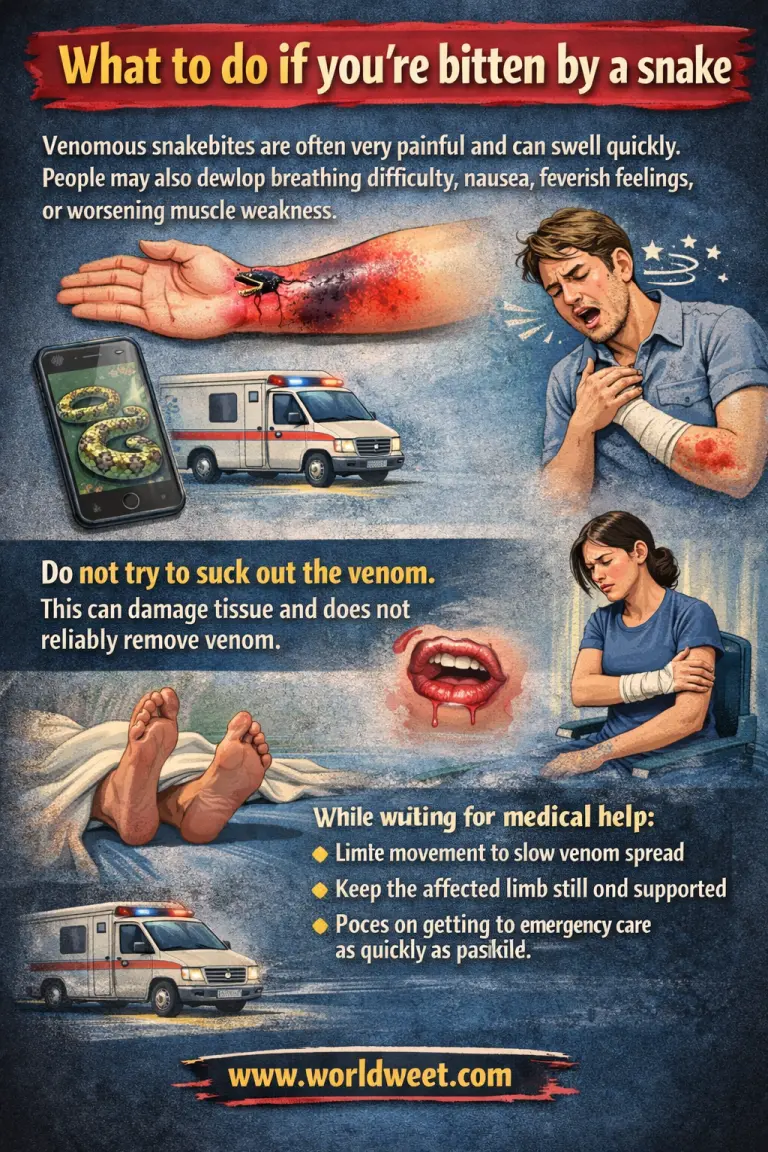
Venomous snakebites are often very painful and can swell quickly. People may also develop breathing difficulty, nausea, feverish feelings, or worsening muscle weakness.
The priority is urgent medical care. Go to the nearest clinic or hospital for appropriate treatment/antivenom. If it can be done safely, bring a photo of the snake (or the snake itself only if professionals have secured it)—this can help doctors identify the species.
Do not try to suck out the venom. This can damage tissue and does not reliably remove venom.
While waiting for medical help:
- Limit movement to slow venom spread
- Keep the affected limb still and supported
- Focus on getting to emergency care as quickly as possible
In short: Behavior, pupils, head shape, markings, and tail scales can offer useful clues—but exceptions are common, and guessing up close is never worth the risk. If you encounter a snake, keep your distance, stay calm, and let it move away. And if a bite occurs, treat it as a medical emergency and seek professional care immediately. Respect for wildlife and basic safety habits remain the most effective “snake identification” tools you can carry.