
The year 2025 stands out as a period of exceptional global turbulence, marked by overlapping geopolitical conflicts, domestic political upheavals, and an unprecedented surge in climate-related disasters. From the United States’ confrontational tariff policies and the prolonged Russia–Ukraine war, to escalating violence in the Middle East and renewed border clashes in Southeast Asia, the international system has been placed under sustained strain.
From an analytical perspective, these developments are not isolated incidents. Instead, they reflect deeper structural shifts in global power dynamics, the resurgence of economic nationalism, weakening multilateral institutions, and the increasingly visible consequences of climate change. Together, the events of 2025 signal the emergence of a new era of global risk—one in which unilateral decisions by major actors can trigger far-reaching ripple effects across regions, economies, and societies.
1. Donald Trump’s Tariff Strategy Shakes the Global Economy
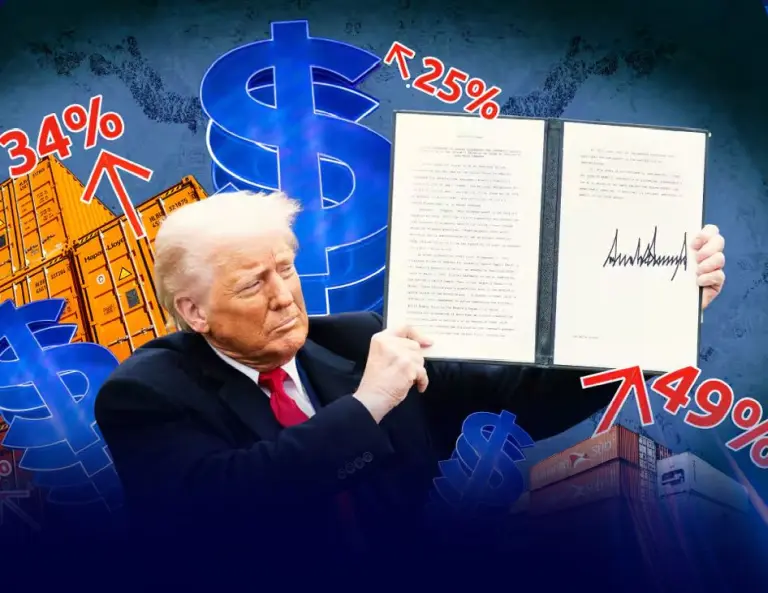
In his January 2025 inauguration speech, U.S. President Donald Trump declared that instead of taxing American citizens to enrich other nations, the United States would impose tariffs on foreign countries to benefit its own people. Following this statement, the Trump administration launched a trade strategy centered on tariffs, aiming to shield domestic industries and counter what it described as unfair trade practices.
On April 2, President Trump unveiled a new system of reciprocal tariffs on imported goods from countries worldwide. A baseline tariff of 10% was introduced for all trading partners, while certain nations faced significantly higher rates. The White House argued that the policy would boost federal revenue, encourage consumers to buy American-made products, create jobs, and attract greater investment into the U.S. economy.
Tariffs were also used as leverage for broader political demands. When announcing tariffs on China, Mexico, and Canada, Trump insisted these countries take stronger action to curb illegal immigration and drug trafficking into the United States. However, the policy has faced multiple legal challenges, and the U.S. Supreme Court is currently reviewing whether the administration’s use of tariff authority violates existing laws.
2. Russia–Ukraine War Escalates Despite Peace Efforts
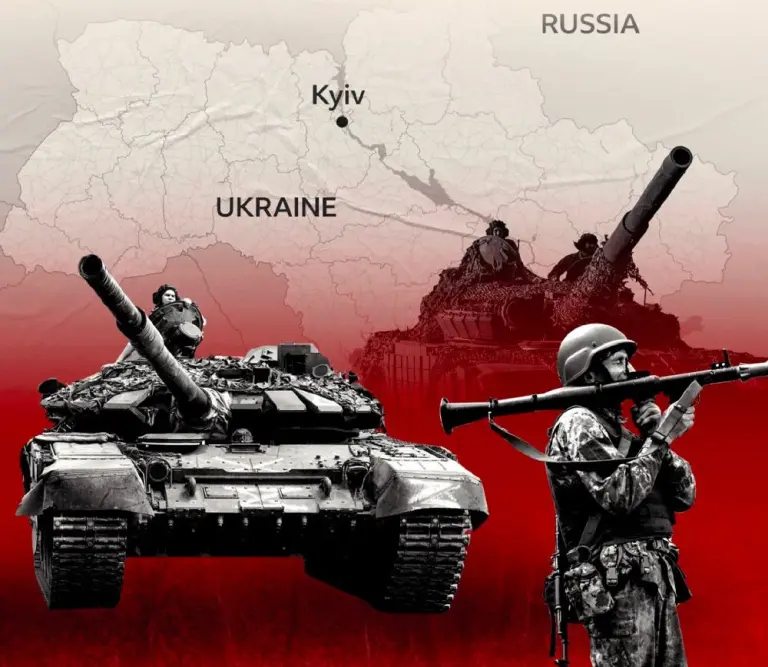
Nearly four years after it began, the Russia–Ukraine conflict shows no sign of ending. Russian forces continue to bombard Ukrainian cities, while Kyiv has intensified drone strikes and long-range attacks on Russian oil infrastructure and military targets deep inside Russian territory. Independent estimates suggest the war has resulted in hundreds of thousands of casualties and displaced nearly 10 million people. Ukraine has suffered extensive destruction, with entire towns reduced to rubble, while some Russian regions have also experienced damage.
Numerous diplomatic initiatives have been attempted, ranging from talks in Saudi Arabia to meetings at the White House, and even a high-profile summit in Anchorage, Alaska, between U.S. President Donald Trump and Russian President Vladimir Putin. Despite these efforts, the fighting has persisted.
Most recently, the Trump administration proposed a 28-point peace plan that would offer Ukraine security guarantees but require it to cede Crimea as well as the Donetsk and Luhansk regions to Russia. The proposal also barred Ukraine from joining NATO, though it left the door open for European Union membership.
Ukraine and its European allies rejected the initial proposal, arguing that it favored Moscow, and presented a revised peace framework. Negotiations remain ongoing as all sides search for a plan acceptable to both Kyiv and Moscow.
3. Middle East Boils Over Amid Israel-Related Conflicts
The October 2023 cross-border attack by Hamas militants sent shockwaves throughout Israel. In response, Israel launched a large-scale military campaign in the Gaza Strip, frequently expanding operations beyond its borders and significantly reshaping the Middle Eastern political landscape.
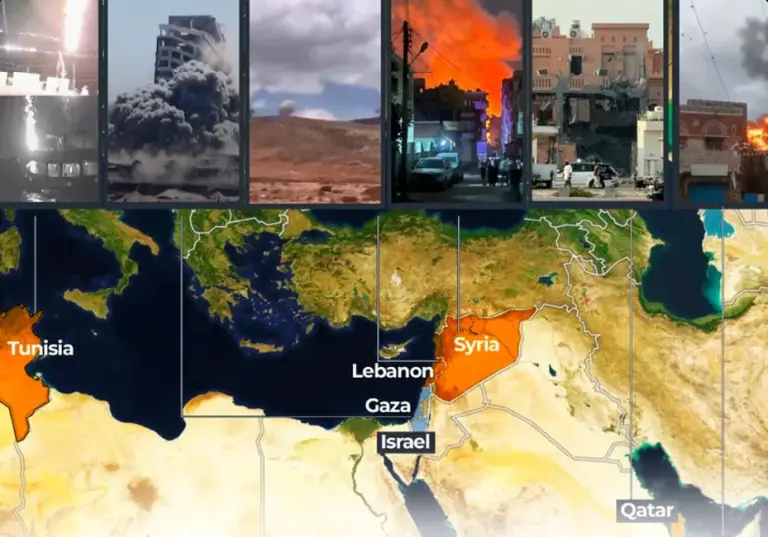
Over the past year, fighting has spread far beyond Gaza, evolving into open conflict on seven fronts. Israeli Prime Minister Benjamin Netanyahu identified Iran, Hamas in Gaza, Hezbollah in Lebanon, the Houthi movement in Yemen, Shiite militias backed by Iran, armed groups in Syria, and Palestinian forces in the West Bank as Israel’s primary adversaries. Israeli leaders have framed these conflicts as a matter of national survival, insisting that victory is the only option.
On June 13, Israel carried out a preemptive strike on Iranian nuclear facilities. Iran retaliated with hundreds of ballistic missiles and suicide drones. The 12-day Israel–Iran conflict ended in a ceasefire brokered under U.S. pressure. Many analysts view this confrontation as the peak of a decades-long proxy war, in which Iran is accused of supporting groups like Hamas and Hezbollah to target Israel.
4. Thailand–Cambodia Border Conflict Reignites
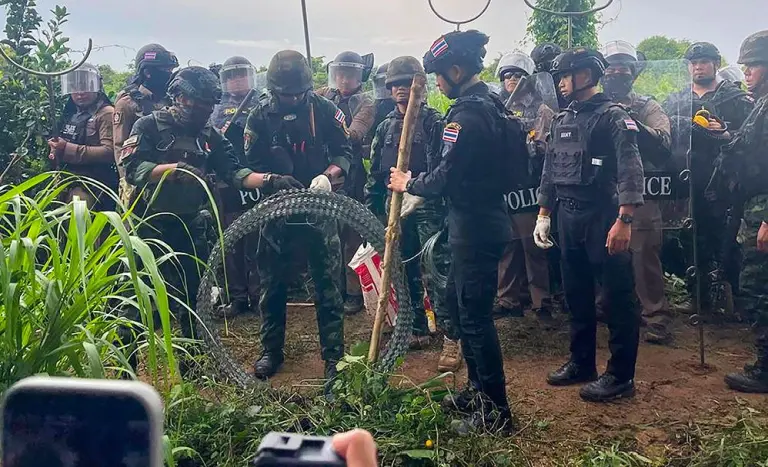
The 2025 Thailand–Cambodia border clashes stem from long-standing territorial disputes, particularly around ancient temple complexes such as Ta Muen Thom, Preah Vihear, and Ta Krabey. Violence escalated sharply in July after a landmine explosion injured a Thai soldier, triggering direct confrontations, artillery exchanges, and airstrikes between July 24 and 28. The fighting caused casualties on both sides and forced hundreds of thousands of civilians to flee.
Tensions eased temporarily after both governments announced an “immediate and unconditional” ceasefire effective from midnight on July 29, following talks in Malaysia. On October 26, the prime ministers of Thailand and Cambodia signed a joint peace declaration at the 47th ASEAN Summit in Kuala Lumpur, witnessed by ASEAN Chair Malaysian Prime Minister Anwar Ibrahim and U.S. President Donald Trump.
However, hostilities resumed on December 7, resulting in at least 101 deaths. More than 700,000 civilians from border provinces were displaced, infrastructure suffered extensive damage, and multiple trade crossings were shut down.
Both Bangkok and Phnom Penh accused each other of escalating tensions and demanded the other side initiate a ceasefire. Regional and international actors expressed deep concern, urging restraint and a return to dialogue.
After three days of meetings, the Thailand–Cambodia General Border Committee reached a new ceasefire agreement on December 27. Defense ministers from both countries agreed to maintain current troop deployments, warning that any military buildup would worsen tensions and undermine long-term peace efforts.
5. Rising Tensions Between the United States and Venezuela
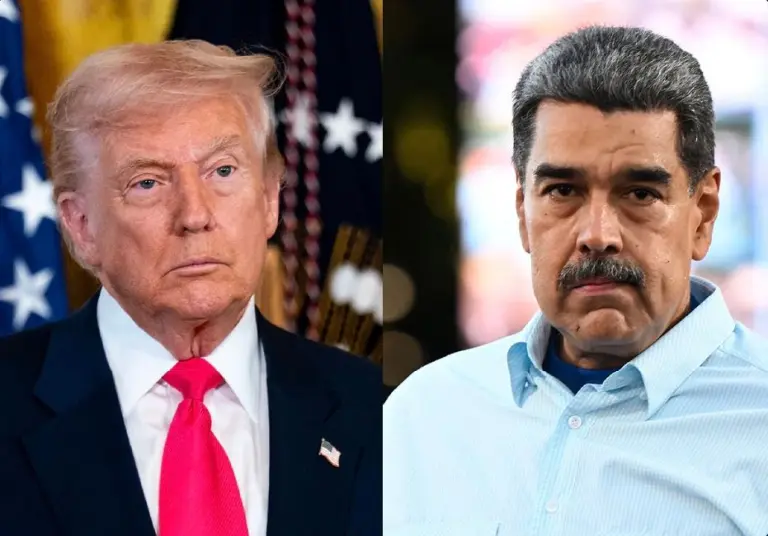
Starting in September, the U.S. Pentagon deployed a sizable military force near Venezuelan waters, including warships, fighter jets, and thousands of troops. President Donald Trump described the move as part of a counter-narcotics operation, accusing the government of Venezuelan President Nicolás Maduro of ties to drug cartels.
Between September and October, the U.S. Navy repeatedly intercepted vessels suspected of smuggling drugs in the Caribbean. By early December, U.S. operations had destroyed 23 ships and resulted in 87 fatalities. On December 10, the Trump administration seized an oil tanker off the Venezuelan coast, marking a significant escalation in bilateral tensions.
President Maduro rejected Washington’s accusations, denying that Venezuela is a major hub for drug production or trafficking. He claimed the government had dismantled large-scale narcotics networks and defeated notorious gangs such as Tren de Aragua. Maduro accused the U.S. of using anti-drug claims as a pretext to target Venezuela’s oil and gas resources.
6. South Korea in Turmoil After President Is Ousted and Arrested
On December 3, 2024, then-President Yoon Suk-yeol unexpectedly declared emergency martial law, citing the need to protect constitutional order. The decree was lifted just six hours later under intense pressure from parliament and the public.
The following day, South Korea’s National Assembly suspended Yoon from office. On January 15, 2025, he was arrested by the Corruption Investigation Office for High-Ranking Officials but was released on bail in March. On April 4, the Constitutional Court formally removed him from office, making him the second South Korean president to be impeached while in power, after Park Geun-hye.
On July 10, a court issued a second arrest warrant over concerns that Yoon might destroy evidence. He now faces multiple criminal charges, including insurrection, abuse of power, and illegal actions related to the martial law declaration.
The fallout also ensnared other high-profile figures. Yoon’s wife, former First Lady Kim Keon-hee, and former Prime Minister Han Duck-soo are both facing potential 15-year prison sentences.

7. Japan Appoints Its First Female Prime Minister
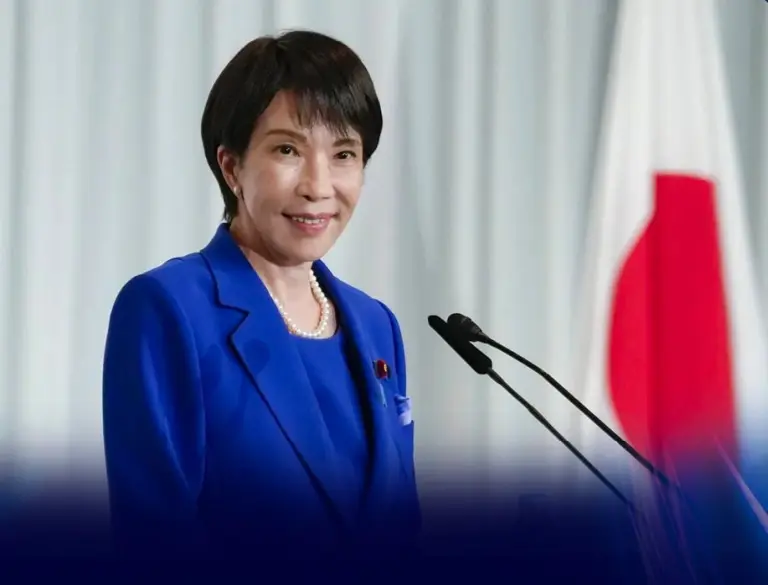
On October 21, Liberal Democratic Party leader Sanae Takaichi won a parliamentary vote to become Japan’s new prime minister.
Takaichi made history as Japan’s first female prime minister, breaking a long-standing gender barrier in the country’s male-dominated political system. Women currently hold only about 16% of seats in Japan’s lower house, and the country consistently ranks low on global gender equality indexes.
Born in Nara Prefecture and entering politics in 1993, the 64-year-old Takaichi is widely regarded as a close protégé of the late Prime Minister Shinzo Abe. She has pledged to continue Abe’s political legacy following his assassination in 2022 and has cited former UK Prime Minister Margaret Thatcher as a personal inspiration.
Over more than three decades in public life, Takaichi has held several senior positions, including Minister for Economic Security and Minister of Internal Affairs.
8. Pope Francis Passes Away
Pope Francis, the 266th pontiff of the Roman Catholic Church and the first pope from Latin America, passed away on April 21 at the age of 88. The Vatican announced that he died from a stroke that led to coma and irreversible heart failure, following prolonged health complications including double pneumonia, diabetes, and hypertension. He had spent 38 days hospitalized for respiratory treatment prior to his death.
Catholics worldwide and global leaders expressed profound sorrow and respect following his passing.
His funeral was held on April 26 at St. Peter’s Basilica in Vatican City, drawing nearly 200,000 mourners, including world leaders such as U.S. President Donald Trump, UK Prime Minister Keir Starmer, French President Emmanuel Macron, and Ukrainian President Volodymyr Zelensky.
In accordance with his wishes, Pope Francis was laid to rest at the Basilica of St. Mary Major in Rome, rather than St. Peter’s Basilica. After a nine-day mourning period, the Vatican convened a conclave on May 7. Following four rounds of voting, Cardinal Robert Francis Prevost of the United States was elected Pope Leo XIV on May 8, continuing Francis’s legacy of peace and dialogue.

9. Deadly Passenger Plane Crash in India
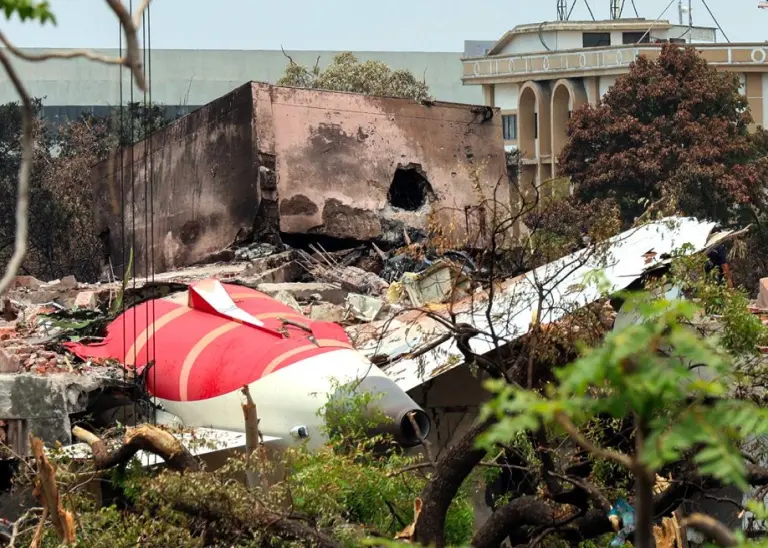
On June 12, 2025, Air India Flight AI171, a Boeing 787-8 Dreamliner carrying 242 people, crashed just minutes after takeoff from Ahmedabad Airport in western India.
The aircraft went down in a densely populated area, damaging multiple buildings and increasing casualties on the ground. Indian authorities confirmed a total death toll of 260, including 241 people onboard and 19 on the ground.
Among those onboard were 169 Indian nationals, 53 British citizens, 7 Portuguese nationals, and one Canadian. The aircraft had been in service for 12 years. Remarkably, 40-year-old Vishwash Kumar Ramesh was the sole survivor.
Investigators explored various possibilities, including weather conditions, mechanical failure, and human error. A preliminary report released on July 11 by India’s Aircraft Accident Investigation Bureau found that both engines lost thrust after fuel control switches were moved to the “cut-off” position shortly after takeoff. The reason for this remains under investigation, with black box data still being analyzed.
The disaster ranks among the deadliest aviation accidents of the decade and has prompted a global reassessment of aviation safety and emergency procedures.
10. Natural Disasters Claim Thousands of Lives Worldwide
The year 2025 stands out as one of the most extreme and destructive periods for natural disasters in modern history. A succession of catastrophic events across multiple continents caused massive human and economic losses, highlighting the accelerating impacts of climate change and the growing challenge of disaster preparedness.
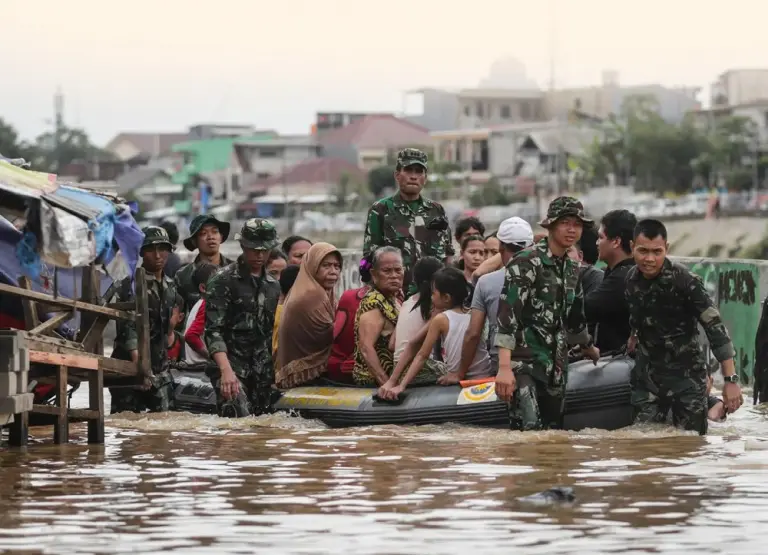
Floods and landslides triggered by severe storms proved the deadliest. In just one month, disasters in Indonesia, Sri Lanka, and Thailand killed more than 1,700 people, displaced millions, and left hundreds missing. In Sri Lanka, Cyclone Ditwah in late November affected nearly 10% of the population, paralyzed transportation, shut down government offices, and devastated farmland, with recovery costs estimated at $7 billion.
Indonesia also suffered heavily when Typhoon Senyar struck Sumatra, causing flash floods that killed over 1,000 people. The storm later swept through Malaysia and Thailand, claiming another 200 lives.
In the United States, record rainfall caused flash floods in Texas in July, killing at least 137 people. Earlier in January, Los Angeles experienced the most destructive wildfire in its history, resulting in 28 deaths, the destruction of more than 1,000 structures, and the evacuation of over 150,000 residents, with economic losses reaching hundreds of billions of dollars.
Europe endured a brutal summer marked by prolonged heatwaves, with temperatures soaring to 46°C in Spain and Portugal. Scientists estimate that more than 24,000 deaths across Europe between June and August were linked to extreme heat.
Powerful earthquakes added to the toll. A 7.7-magnitude quake in Myanmar in late March killed over 5,400 people, while Afghanistan and China also recorded major seismic events resulting in thousands of casualties.
Taken as a whole, the defining events of 2025 reveal a world grappling with heightened instability on multiple fronts. Military conflicts continue to intensify, political systems face internal crises, and natural disasters grow more destructive and frequent. These forces do not operate independently; rather, they increasingly reinforce one another, amplifying global uncertainty.
From a strategic standpoint, the most pressing challenge ahead lies not merely in managing individual crises, but in restoring strategic trust among major powers while strengthening international cooperation to address transnational threats. Without meaningful reforms to global governance and a renewed commitment to dialogue, the international community risks sliding deeper into a cycle of fragmentation and conflict—where the cost is measured not only in economic losses, but in human lives and the erosion of an already fragile world order.