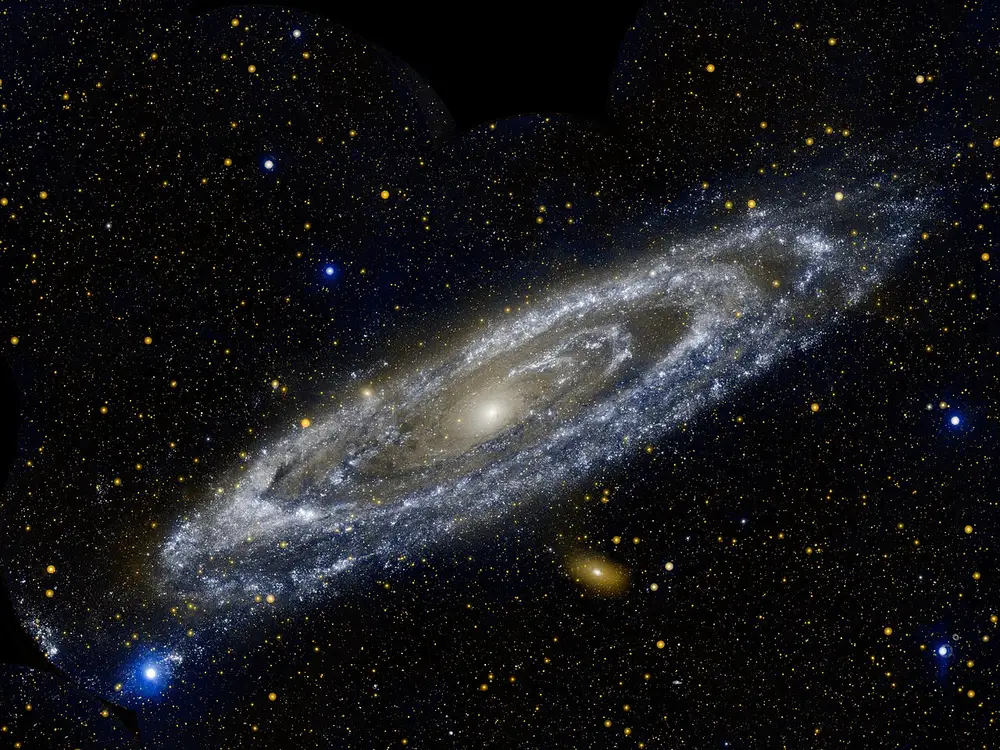
Space is full of extreme temperatures, strange worlds, and surprising physics. Put your cosmic knowledge to the test—and if you enjoy planetary mysteries, explore our report on lava-covered super-Earth TOI-561 b.
Question 1 of 10
Which planet in our solar system is the hottest on average?
Venus has a thick carbon dioxide atmosphere that traps heat in a runaway greenhouse effect, pushing surface temperatures to around 867°F (464°C).
Question 2 of 10
On which planet is a single day (rotation) longer than its year (orbit around the Sun)?
Venus takes about 243 Earth days to rotate once on its axis, compared to 225 Earth days to complete one orbit around the Sun.
Question 3 of 10
Sound can travel freely through the vacuum of deep space.
False. Sound waves need a medium such as air, water, or solid rock to travel; space is a near-vacuum, so sound cannot propagate there.
Question 4 of 10
What is the largest volcano in our solar system?
Olympus Mons on Mars rises roughly 13.6 miles (22 km) high—nearly three times the height of Mount Everest.
Question 5 of 10
Which planet has the most confirmed moons in our solar system?
Saturn leads the solar system with well over 140 confirmed moons, overtaking Jupiter after recent telescopic discoveries.
Question 6 of 10
Approximately how long does light take to travel from the Sun to Earth?
Sunlight travels at about 186,282 miles per second and takes roughly 8 minutes and 20 seconds to reach Earth.
Question 7 of 10
Which planet rotates almost completely on its side relative to its orbit?
Uranus has an axial tilt of about 98 degrees, likely caused by a massive ancient collision, making it appear to roll around the Sun.
Question 8 of 10
What type of galaxy is our Milky Way?
The Milky Way is a barred spiral galaxy featuring a central bar-shaped structure of stars with sweeping spiral arms.
Question 9 of 10
What is the boundary around a black hole beyond which nothing—not even light—can escape?
The event horizon is the point of no return around a black hole; once matter or light crosses it, escape is impossible.
Question 10 of 10
Which spacecraft was the first human-made object to enter interstellar space?
Launched in 1977, Voyager 1 crossed the heliopause and entered interstellar space in August 2012.
Fascinated by moon and space discoveries? Read about the Chang’e-6 lunar soil mystery and challenge your friends to beat your score.