Nature’s record book is packed with extremes—from blistering speeds to boiling deep-sea vents and ancient organisms. Test your nature records trivia, and play our Ocean Life Quiz.
Question 1 of 10
Which animal is the fastest living creature on Earth overall, reaching over 200 mph during a hunting dive?
A peregrine falcon’s high-speed hunting stoop makes it the fastest animal on the planet.
Question 2 of 10
Which microscopic eight-legged ‘water bear’ can survive boiling, freezing near absolute zero, and the vacuum of space?
Tardigrades curl into a dehydrated ‘tun’ state that protects their cells in extreme environments.
Question 3 of 10
The blue whale is larger than any dinosaur known to have ever lived.
True. Supported by ocean buoyancy, blue whales reach ~150+ tons, outweighing even the largest sauropod dinosaurs.
Question 4 of 10
Which tiny bird native to Cuba is the smallest living bird on Earth?
Weighing less than a penny (~2 grams) and measuring ~2.2 inches long, Cuba’s bee hummingbird is the smallest bird.
Question 5 of 10
Which deep-sea colonial organism has been recorded at lengths exceeding 150 feet—longer than a blue whale?
A giant colonial siphonophore (Praya dubia) recorded off Australia reached roughly 150 feet, though among non-colonial animals, bootlace worms and blue whales hold top length records.
Question 6 of 10
Earth’s lowest recorded natural air temperature (-89.2°C / -128.6°F) was measured at Vostok Station in Antarctica.
True. Set in July 1983 on the high East Antarctic Ice Sheet, it remains the coldest official surface air reading.
Question 7 of 10
Which fast-growing grass holds the record for the fastest-growing land plant—capable of shooting up nearly 3 feet in 24 hours?
Certain giant bamboo species elongate at astonishing speeds during peak warm rainy seasons.
Question 8 of 10
Which marine predator—using a streamlined body and tall dorsal fin—is among the fastest swimmers in the ocean?
Sailfish (alongside black marlin and shortfin mako) are among the fastest ocean swimmers, clocking bursts above 50–60 mph.
Question 9 of 10
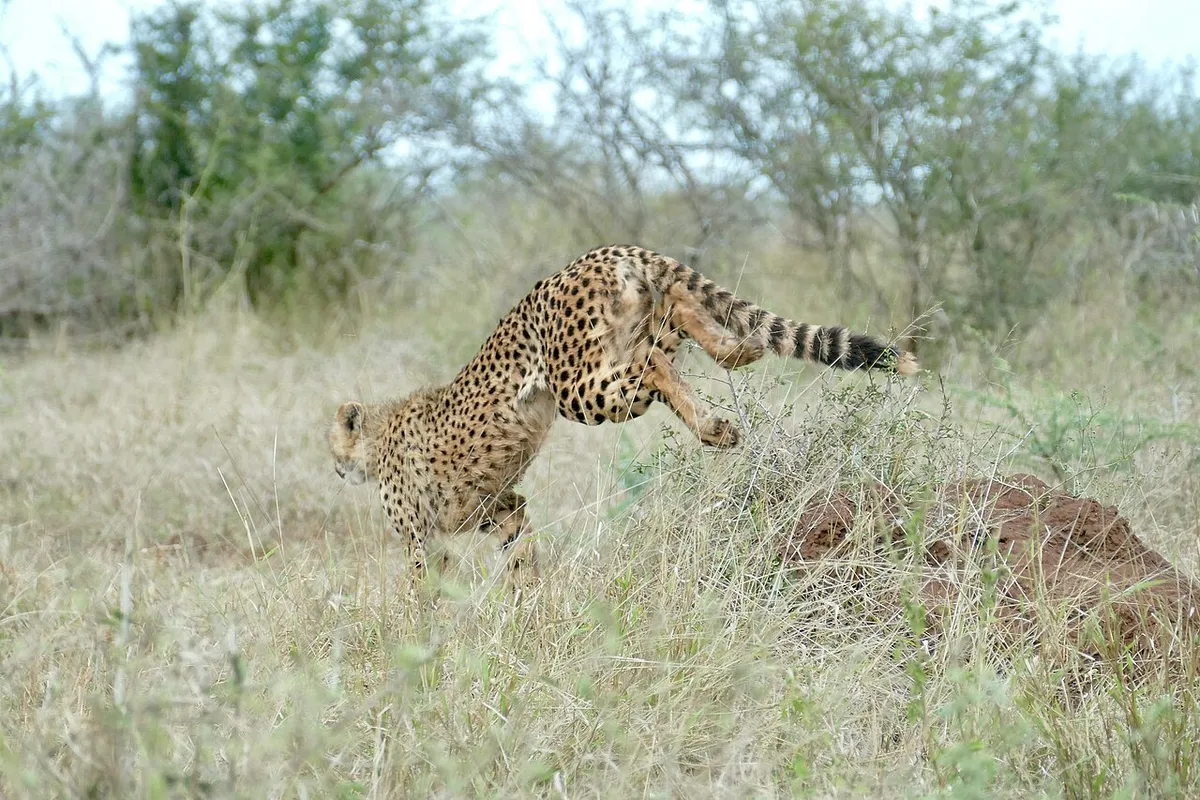
The cheetah can maintain its top 65 mph sprint continuously for 10 miles without tiring.
Myth. Cheetahs overheat rapidly and typically sprint for only 20–30 seconds (around a quarter mile).
Question 10 of 10
Which living desert shrub in California’s Mojave Desert—a clonal ring called ‘King Clone’—is estimated to be over 11,000 years old?
Expanding outward slowly from a single ancient seed, the King Clone creosote ring is one of Earth’s oldest living clonal plants.
Want more wildlife superlatives? Check out the largest fish species in the ocean.