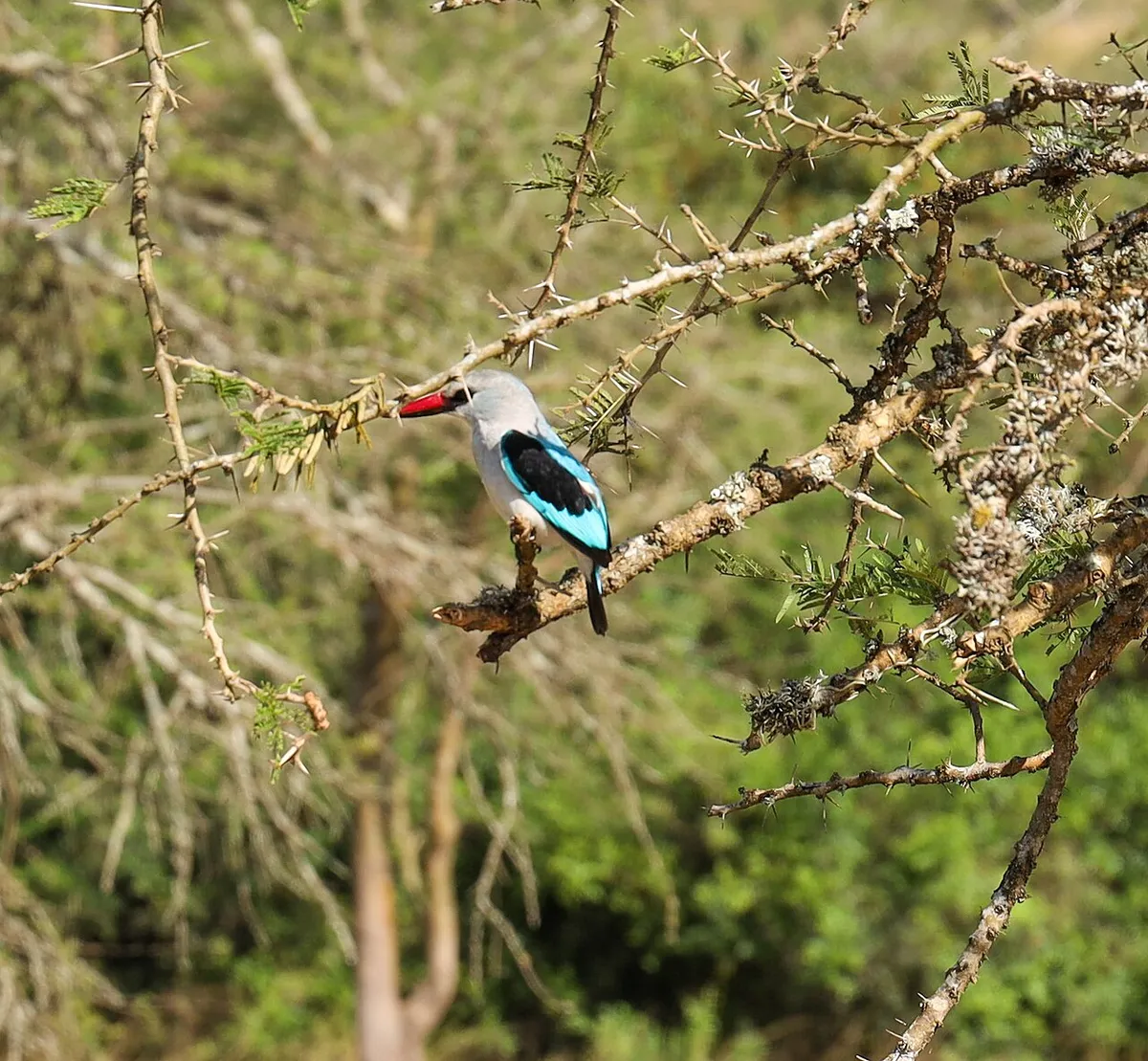
Birds come in astonishing shapes, colors, and abilities. See how many avian clues you can solve—and if you keep pet birds or love colorful plumage, explore our guide on different types of parakeets.
Question 1 of 10
Which bird is the only group known to fly backward and hover effortlessly?
Hummingbirds rotate their wings in a figure-eight pattern, giving them lift on both the forward and backward strokes.
Question 2 of 10
Which bird achieves the fastest diving speed in the animal kingdom?
During a hunting stoop, a peregrine falcon can dive at speeds exceeding 200 mph (320 km/h).
Question 3 of 10
What is the largest living bird species by height and weight?
The common ostrich can stand up to 9 feet (2.7 meters) tall and weigh over 300 pounds (135 kg).
Question 4 of 10
Flamingos are born with bright pink feathers.
False. Flamingo chicks hatch with gray or white down; their pink color develops later from carotenoid pigments in algae and crustaceans they eat.
Question 5 of 10
Which seabird has the longest wingspan of any living bird?
The wandering albatross has a wingspan reaching up to 11.5 feet (3.5 meters), built for gliding effortlessly over open oceans.
Question 6 of 10
An owl can rotate its head a full 360 degrees.
False. Owls can turn their heads up to about 270 degrees in either direction thanks to extra neck vertebrae and specialized blood vessels, not a full 360.
Question 7 of 10
Which bird is famous for mimicking chainsaws, camera shutters, and other birds’ calls?
The Australian superb lyrebird has an extraordinarily complex syrinx (vocal organ) that lets it imitate dozens of natural and mechanical sounds.
Question 8 of 10
Which flightless bird native to New Zealand has nostrils at the tip of its long beak?
The kiwi is the only bird with nostrils at the very tip of its bill, helping it sniff out worms and insects underground.
Question 9 of 10
Which bird migrates the farthest each year, traveling from the Arctic to the Antarctic and back?
Arctic terns make a round-trip migration of roughly 44,000 miles (71,000 km) or more every year, experiencing two summers.
Question 10 of 10
Penguins are found naturally at both the North Pole and the South Pole.
False. Penguins live almost exclusively in the Southern Hemisphere; none live naturally at the North Pole.
Spotting backyard birds soon? Learn how to tell a house finch from a purple finch and challenge your birdwatching friends.