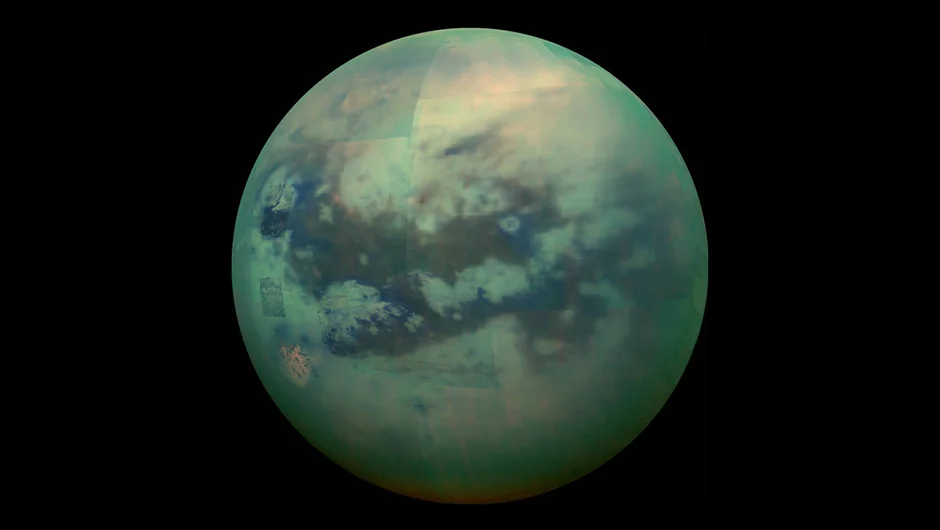
More than 1.4 billion kilometers from Earth orbits Titan, the crowning jewel of Saturn’s extensive retinue of moons. Larger than the planet Mercury and swathed in a dense golden nitrogen atmosphere, Titan is the only celestial body in the known universe, besides Earth, that harbors stable liquid rivers, lakes, and expansive seas across its surface. However, under Titan’s frigid minus 180 degrees Celsius (minus 290°F) climate, these liquid bodies are not filled with water, but with liquid methane and ethane.
Yet, as planetary scientists poured over radar and infrared datasets gathered during the historic 13-year Cassini-Huygens mission, they encountered a deeply perplexing phenomenon: Titan’s immense hydrocarbon seas are eerily, unnervingly calm. Across hundreds of miles of open liquid, waves measure barely a few millimeters in height, presenting surfaces as unruffled and reflective as pristine polished glass.
Lakes of Liquid Natural Gas
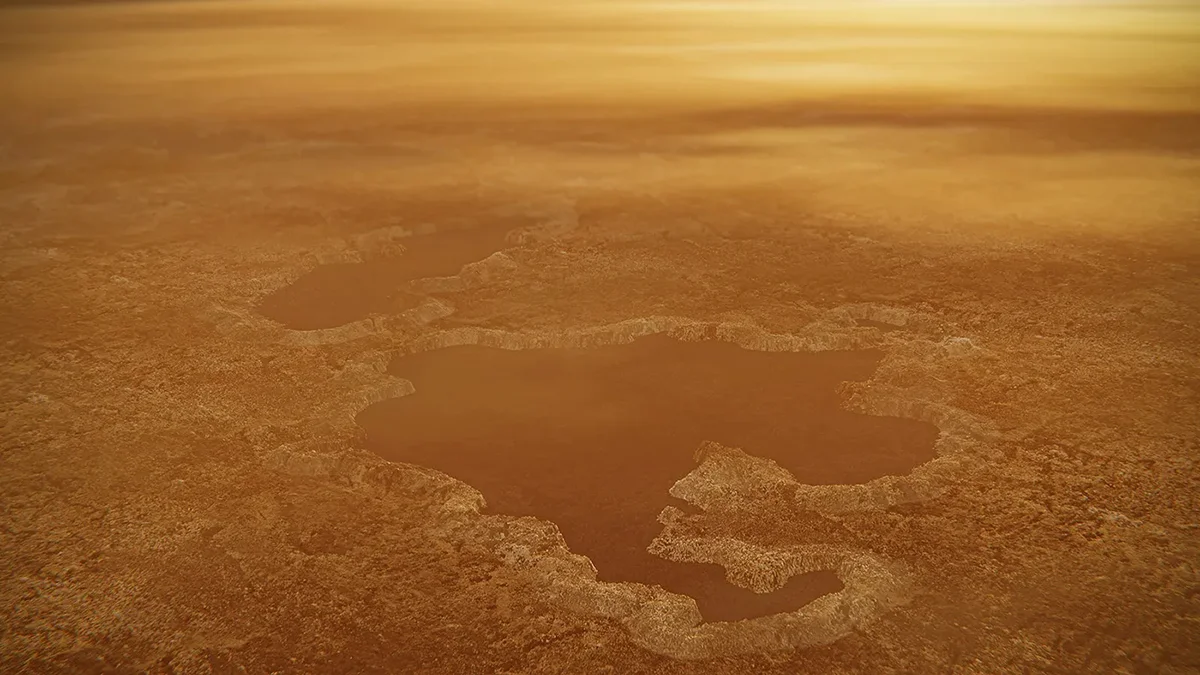
Titan’s surface hydrologic cycle is a bizarre, low-temperature mirror of Earth’s. Methane clouds condense in the upper troposphere, falling as gentle rain that carves dendritic river valleys across towering mountains of rock-hard water ice. This runoff feeds massive northern polar seas like Kraken Mare, Ligeia Mare, and Punga Mare—bodies of liquid natural gas spanning hundreds of thousands of square kilometers and reaching depths exceeding 300 meters.
Given Titan’s thick atmosphere (which exerts 50% more surface pressure than Earth’s) and low surface gravity, atmospheric physicists calculated that even gentle breezes should easily kick up rolling waves several meters high. Yet radar altimetry reflected off Kraken Mare showed almost zero surface roughness. What keeps Titan’s seas so eerily still?
Cracking the Wave Mystery
Recent atmospheric modeling and laboratory cryogenic experiments offer compelling answers. First, Titan experiences pronounced, elongated seasons lasting roughly seven Earth years each. Most Cassini flybys occurred during northern winter and early spring, when polar wind speeds were exceptionally low—falling below the threshold required to initiate wind-wave coupling in liquid hydrocarbons.
Second, researchers suggest that Titan’s liquid methane may be coated with a thin, viscous monolayer of complex organic molecules—photochemically produced aerosol polymers called tholins. Much like an oil slick calms turbulent waves on Earth, this organic dampening layer could suppress capillary wave formation, maintaining a glassy, mirror-like surface even under moderate breezes.
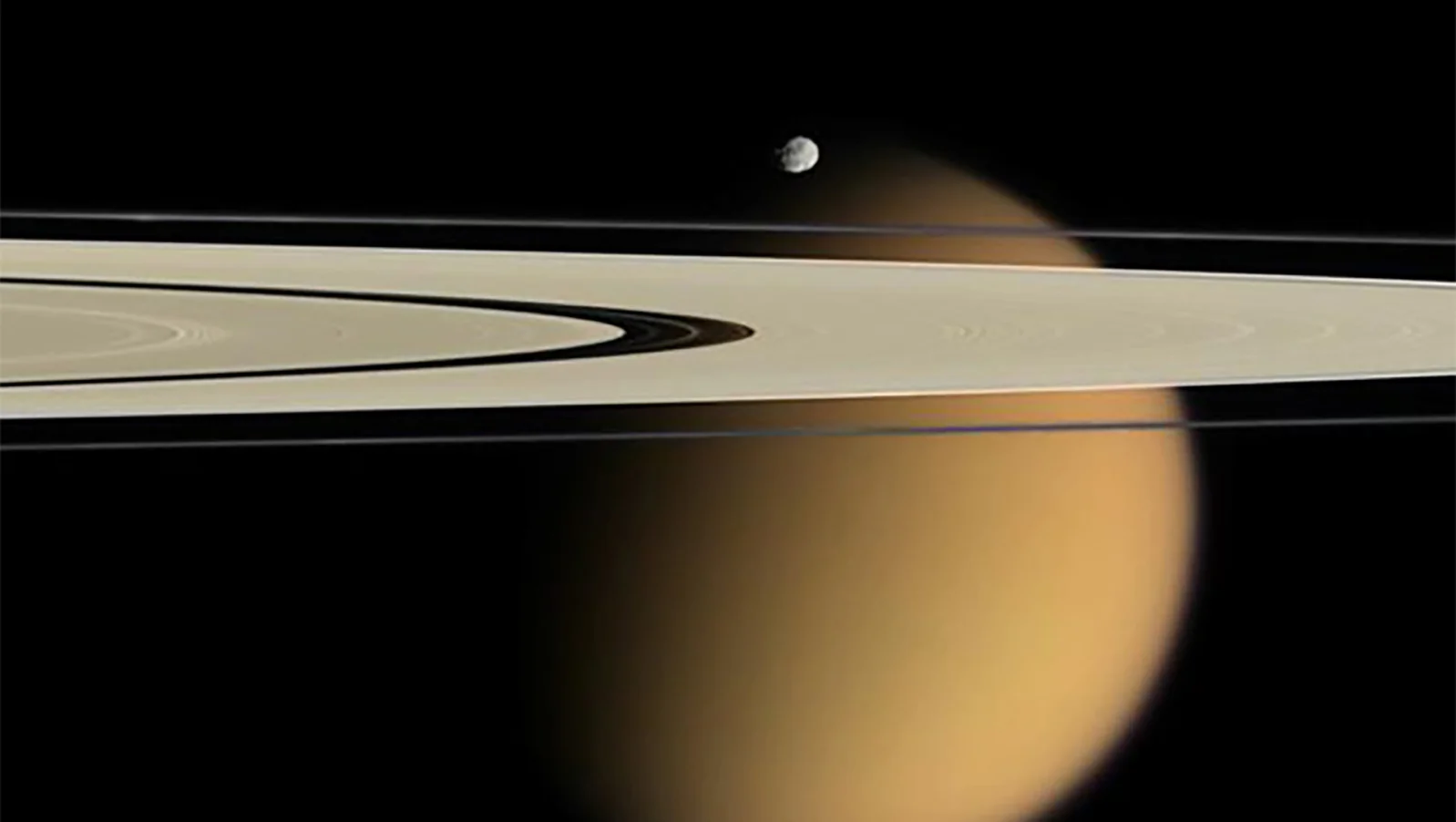
As scientists compare Titan’s hydrocarbon dynamics with other outer solar system worlds, such as the remarkable discovery that Saturn’s moon Enceladus harbors a subsurface ocean, Titan stands out as a pre-biotic wonderland. NASA’s upcoming Dragonfly rotorcraft mission, scheduled to arrive in the 2030s, will fly directly through Titan’s nitrogen skies, landing near its organic sands to decode the complex chemistry of this alien waterless world.