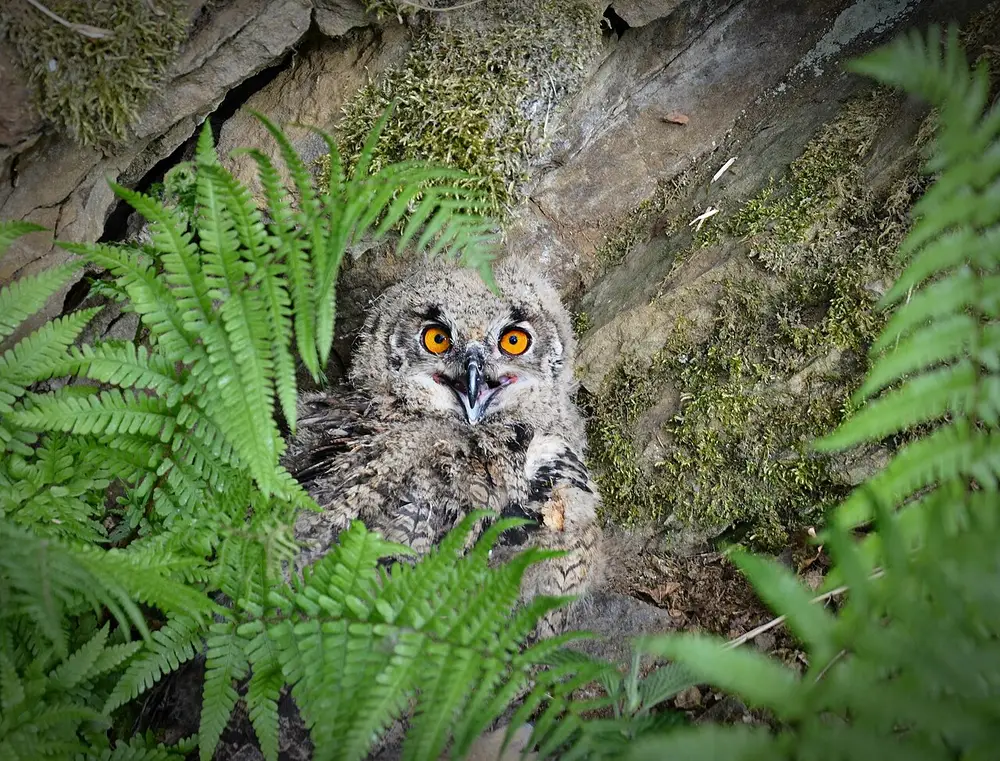
When the sun sets, a hidden shift of hunters, pollinators, and navigators takes over. Test your knowledge of night-active wildlife, and see our Bird Trivia quiz.
Question 1 of 10
What structure behind the retina causes the eyes of cats, owls, and deer to glow in headlights at night?
The tapetum lucidum reflects unabsorbed light back through the retina, giving nocturnal animals a second chance to see in dim light.
Question 2 of 10
How do owls fly almost completely silently when swooping on prey?
Soft, velvety wing feathers and fringed leading edges muffle aerodynamic noise so prey cannot hear them approaching.
Question 3 of 10
All bats are completely blind and rely solely on echolocation.
Myth. Every bat species can see; large fruit bats have sharp eyesight and do not even use echolocation.
Question 4 of 10
Why do fireflies flash specific light patterns on summer nights?
Each firefly species has its own flash code for courtship, while their glow also warns birds that they taste bitter.
Question 5 of 10
Which nocturnal Australian marsupial is the world’s largest carnivorous marsupial alive today?
Tasmanian devils are stocky nocturnal scavengers and hunters famous for their bone-crushing jaws and eerie screeches.
Question 6 of 10
Cats cannot see anything in absolute pitch-black darkness with zero light.
True. Cats need only about one-sixth the light humans require, but total darkness with zero photons leaves them unable to see.
Question 7 of 10
Which nocturnal desert mammal has huge ears that both radiate excess heat and detect insects underground?
The tiny fennec fox of the Sahara has 6-inch ears that cool its blood and pick up prey scuttling beneath sand.
Question 8 of 10
Why are moths often drawn to porch lights at night?
High-speed tracking studies show moths tilt their backs toward bright light to stay level, causing them to spiral around artificial lamps.
Question 9 of 10
Kiwi birds in New Zealand are nocturnal and rely heavily on smell rather than sight to find worms.
True. Kiwis forage at night with nostrils at the tip of their bills and sensitive whiskers at the base.
Question 10 of 10
Which nocturnal primate of Madagascar taps on tree bark and uses an elongated middle finger to pull out grubs?
The aye-aye uses percussive foraging—tapping wood up to 8 times a second to locate hollow tunnels and extract insects.
Interested in insects that light up the night? Explore the most beneficial insects in the world.