In the wild, disappearing in plain sight can mean the difference between dinner and survival. Test your camouflage knowledge, and explore our Reptiles & Amphibians quiz.
Question 1 of 10
What are the specialized pigment-containing skin cells that allow octopuses and cuttlefish to change color in milliseconds?
Chromatophores expand and contract via tiny muscles controlled by the brain, shifting patterns almost instantaneously.
Question 2 of 10
Why do many pelagic fish, sharks, and penguins have dark backs and pale white bellies?
Countershading breaks up an animal’s silhouette against both the bright ocean surface and the dark water below.
Question 3 of 10
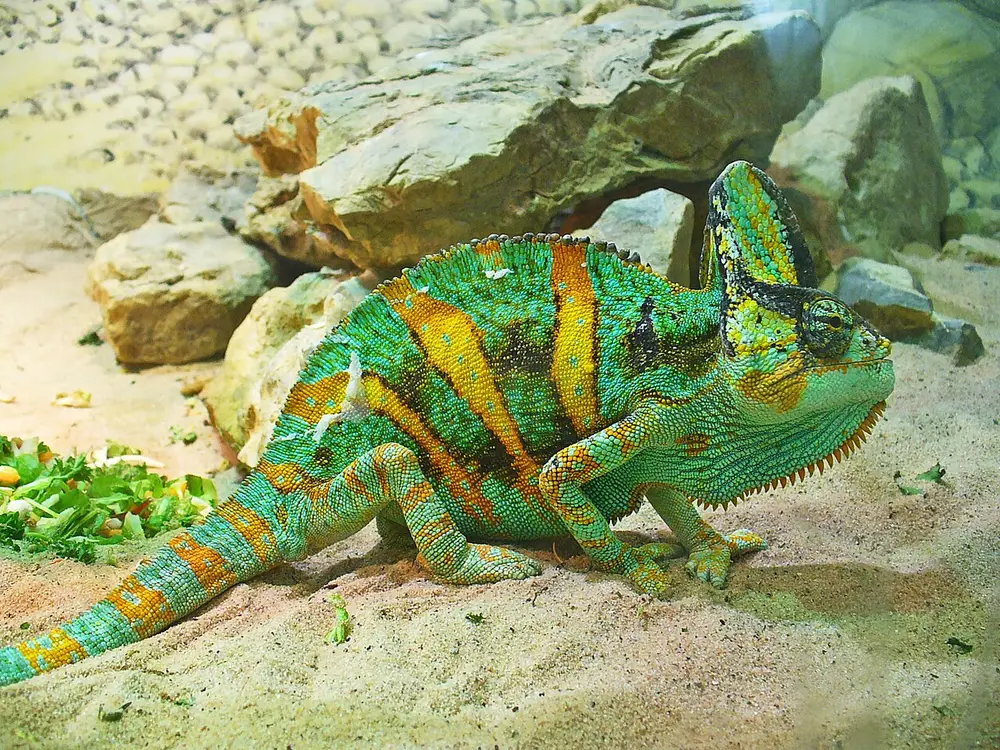
Chameleons change color exclusively to match whatever object they step onto.
Myth. While some species blend in, chameleons shift colors mainly for temperature control, mood, and social signaling.
Question 4 of 10
What is ‘Batesian mimicry’ in nature?
Harmless hoverflies mimicking stinging wasps—or harmless milk snakes mimicking venomous coral snakes—are classic Batesian mimicry.
Question 5 of 10
Which Arctic mammal swaps its brown summer coat for pure white fur every winter?
Arctic foxes molt twice a year, turning snow-white in winter and brown-gray in summer to match tundra rocks.
Question 6 of 10
A mimic octopus can alter both its color and body posture to imitate venomous sea snakes, lionfish, and flatfish.
True. Discovered off Indonesia, the mimic octopus impersonates multiple toxic marine creatures depending on the threat.
Question 7 of 10
How do leaf-tailed geckos and leaf insects avoid detection by birds?
Their flattened bodies, mottled edges, and gentle swaying motion make them nearly indistinguishable from dead or living leaves.
Question 8 of 10
What is the purpose of ‘eyespot’ markings on the wings of owl butterflies and some moths?
Large false eyes startle predators or lure pecks toward disposable wing edges instead of the insect’s head.
Question 9 of 10
Snowshoe hares rely on seasonal day length (photoperiod), not snowfall, to trigger their white winter coat change.
True. Shorter autumn days trigger hormonal shifts that turn their fur white—which can leave them exposed if snow arrives late.
Question 10 of 10
Which reef fish hides vertically head-down among seagrass blades, swaying with the current?
Slender trumpetfish align vertically beside sea whips or coral branches to ambush passing small fish.
Want to spot real-life lookalikes? Learn how to tell venomous snakes from non-venomous ones.