At 5:30 a.m. on February 2, 1925, a team of sled dogs staggered onto Front Street in Nome, Alaska. Their driver, Gunnar Kaasen, had frostbitten fingers. Strapped to the sled was a metal cylinder holding 300,000 units of diphtheria antitoxin, and not a single glass vial inside it was broken.
The black husky at the front of the team was Balto. Before the year was out he had his own statue in New York. The full story of the serum run is bigger than one dog, though, and the musher who owned him spent years saying so.
At a glance
- Who
- Balto, a Siberian husky, and musher Gunnar Kaasen
- What
- The last leg of the 1925 serum run
- Where
- Nenana to Nome, Alaska
- When
- January 27 to February 2, 1925
- Distance
- 674 miles (1,085 km), about 20 mushers and 150 dogs
A town with one doctor and no medicine
In the winter of 1924 to 1925, Dr. Curtis Welch was the only doctor in Nome. He worked with four nurses at the Maynard Columbus Hospital. His supply of diphtheria antitoxin had expired, and the replacement he ordered never arrived: by then the sea was frozen and the port was closed until spring.
In December, Welch treated several children for what looked like tonsillitis. Four of them died. In mid-January 1925 he diagnosed the first clear case of diphtheria in a three-year-old boy, who died. The next day a seven-year-old girl died after Welch tried the expired antitoxin on her.
Nome went into quarantine. On January 22, Welch sent a telegram asking for one million units of antitoxin. He pointed out that mail was the only way in.
Why nobody flew it in
An airplane was the obvious idea, and it was turned down. Alaska had only a handful of aircraft that winter, open-cockpit biplanes that had been taken apart for the season. The longest test flight of 1924 had covered 260 miles, less than half the distance to Nome.
On January 24 the board of health voted for dogs. Two days later, 300,000 units of antitoxin turned up at a hospital in Anchorage. The glass vials were wrapped in padded quilts, packed into a metal cylinder weighing a little over 20 pounds, and sent north by train to Nenana.
The relay begins at Nenana
On the night of January 27, “Wild” Bill Shannon took the package at Nenana and set off at 50 degrees below zero. Near Minto the thermometer dropped to minus 62°F. Charlie Evans ran his stretch at minus 64.
The plan was a relay along the mail trail. About 20 mushers and around 150 dogs would each carry the cylinder for one stretch, then hand it on at a roadhouse or village. The press called it the “Great Race of Mercy.”
Seppala and Togo take the longest leg
Leonhard Seppala was a Norwegian-born musher, 48 years old in 1925, and a breeder and racer based in Nome. He set out from Nome to meet the serum coming the other way. His lead dog was Togo, who was 12.
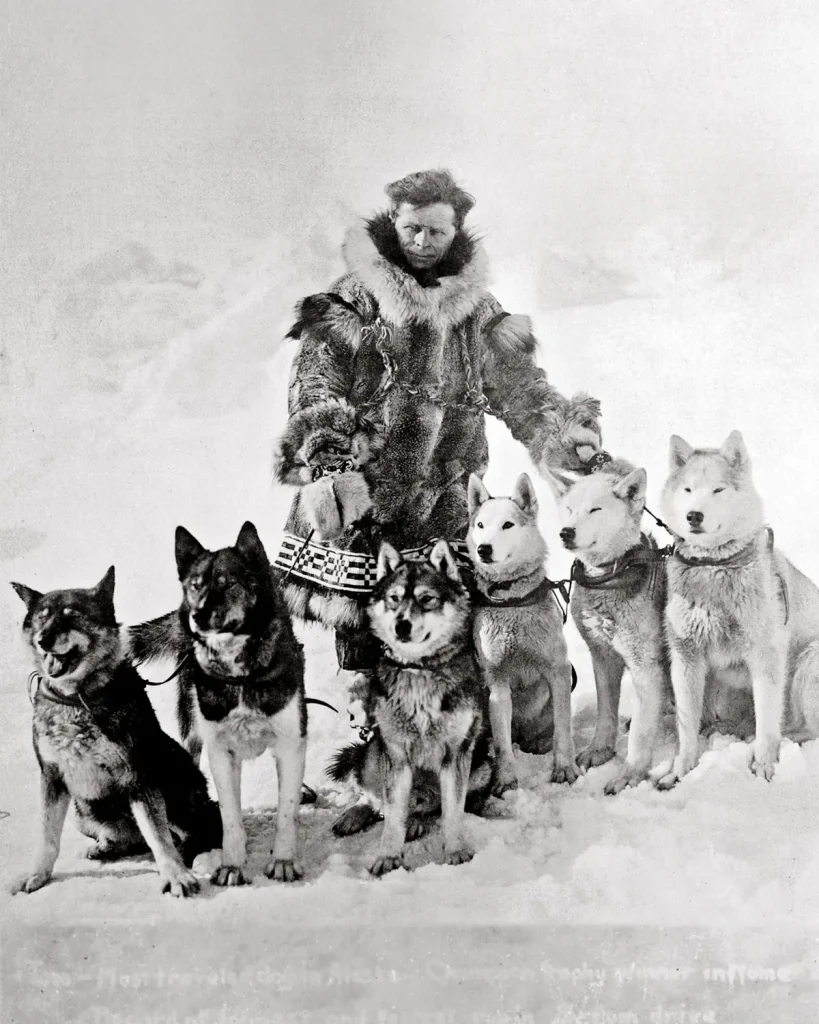
Seppala met the relay near Shaktoolik after about 170 miles. To save time on the way back, Togo led the team straight across about 20 miles of sea ice on Norton Sound, in a blizzard. Seppala’s total run came to about 261 miles, more than 200 miles longer than any other driver’s. At around 3 p.m. on February 1, he handed the cylinder to Charlie Olson at Golovin.
Balto was nobody’s first choice
Balto came from Seppala’s own kennel in Nome. He was born around 1919, a small, stocky husky with a black coat and white markings. Seppala named him after Samuel Balto, a Sámi man who crossed Greenland, the largest island on the planet, with Fridtjof Nansen in 1888.
Seppala did not think much of him. He had Balto neutered at six months and later described him as a “scrub freight dog.” Balto hauled supplies and pulled railcars. He had almost no record as a lead dog before 1925.
Gunnar Kaasen, 42, was waiting at Bluff with a team of Seppala’s second-string dogs. He chose Balto to lead. Seppala later insisted that another dog, Fox, deserved much of the credit.
The last 53 miles
Kaasen left Bluff at about 10 p.m. on February 1, straight into a blizzard. In the whiteout he could barely see the dogs in front of him. On the Topkok River, Balto stopped short at a stretch of broken ice and kept the team out of the water.
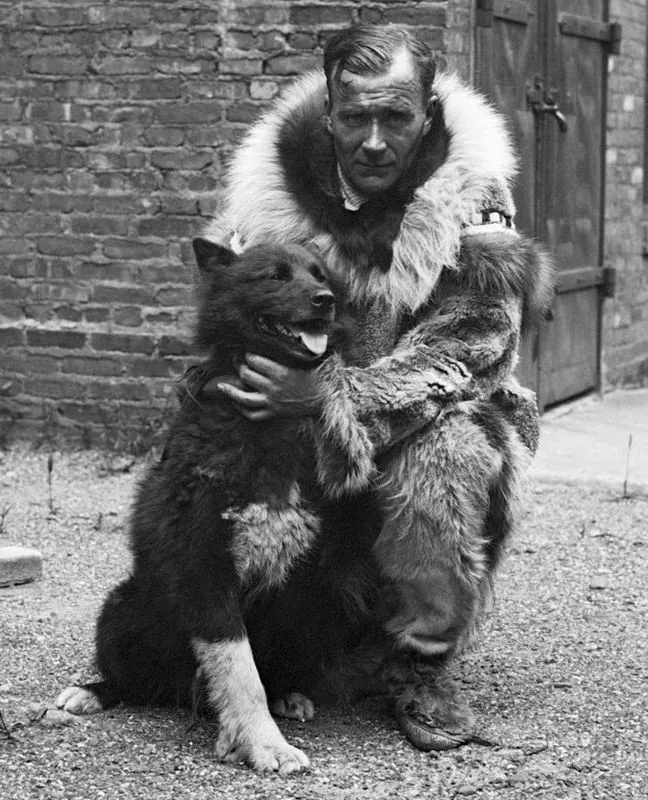
The sled flipped at Bonanza Flat. The cylinder flew off into the snow, and Kaasen dug for it with his bare hands until he found it, frostbiting his fingers. Somewhere along the way he passed the village of Solomon without noticing it.
At Port Safety, between 2 and 3 a.m., the next driver, Ed Rohn, was asleep. He believed Kaasen was held up at Solomon. Kaasen saw the dark cabin and decided not to waste time waking him. He drove the last stretch to Nome himself; Rohn and others later accused him of wanting the glory. Kaasen gave the credit to his dog: “I gave Balto, my lead dog, his head and trusted to him.”
The relay had taken about 127 and a half hours, roughly five and a half days, across 674 miles. By noon the antitoxin had thawed and was ready to use. The official death toll of the outbreak was between five and seven. Welch later estimated that at least 100 more cases went unrecorded in Native camps around Nome.
From hero to sideshow
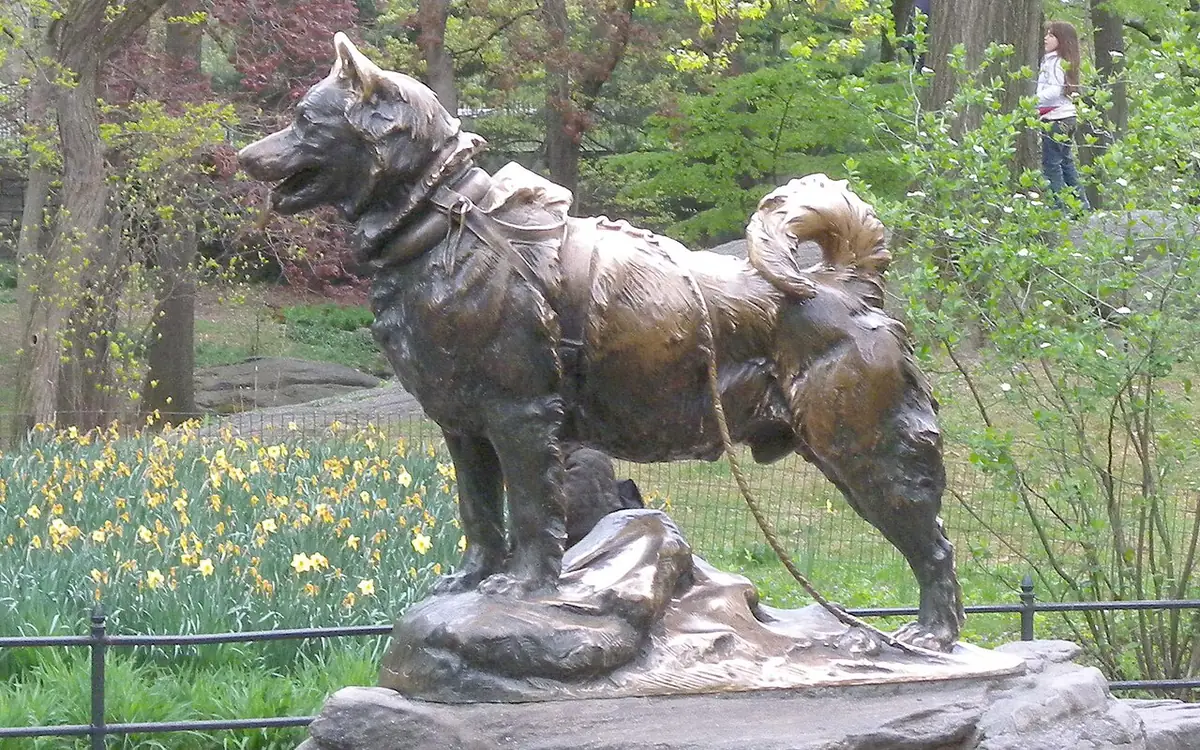
Balto’s fame came fast. On December 15, 1925, a bronze statue of him by sculptor Frederick Roth was unveiled in New York’s Central Park, and Balto attended. Its plaque honors all the sled dogs of the relay and ends with three words: “endurance, fidelity, intelligence.”
Producer Sol Lesser made a short film, Balto’s Race to Nome, which has since been lost. The contract for the dogs was then sold on to vaudeville. By 1927 Balto and his teammates had ended up in a dime museum in Los Angeles, kept in poor conditions.
A Cleveland businessman, George Kimble, saw them there. He started a fundraising drive back home, and in about two weeks Cleveland raised enough to buy the dogs. On March 19, 1927, the team got a hero’s welcome in Cleveland and moved to the Brookside Zoo, where they lived out their lives.
Togo’s side of the story
Seppala never accepted that Balto was the hero of the run. In his 1930 memoir he wrote that “if any dog deserved special mention it was Togo.” In 1960 he went further: “Togo was the best dog that ever traveled the Alaska trail.” Togo ran the longest and most dangerous stretch, including the crossing of Norton Sound.
Togo died on December 5, 1929, aged 16, with Seppala beside him. His mounted body is on display at the Iditarod headquarters in Wasilla, Alaska. In 2019 Disney released Togo, a film about Seppala and his lead dog. The Iditarod sled dog race also remembers the relay, and its honorary musher title is named after Seppala.
Where you can see Balto today
Balto died on March 14, 1933, at about 14 years old. His body was mounted and is displayed at the Cleveland Museum of Natural History.
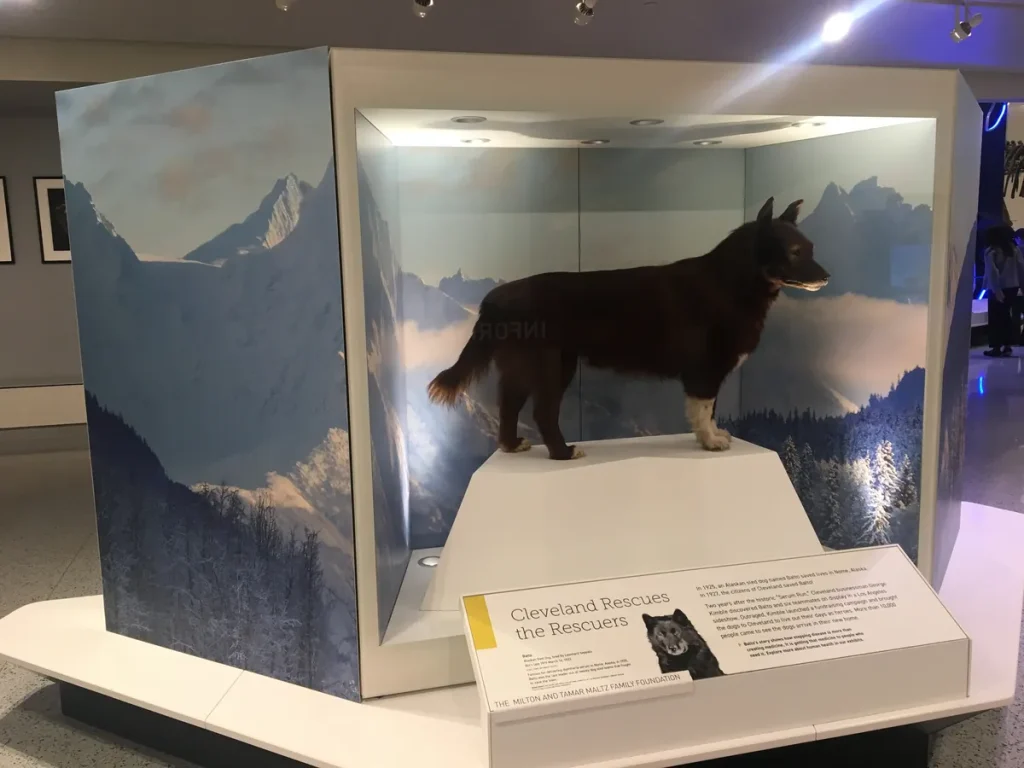
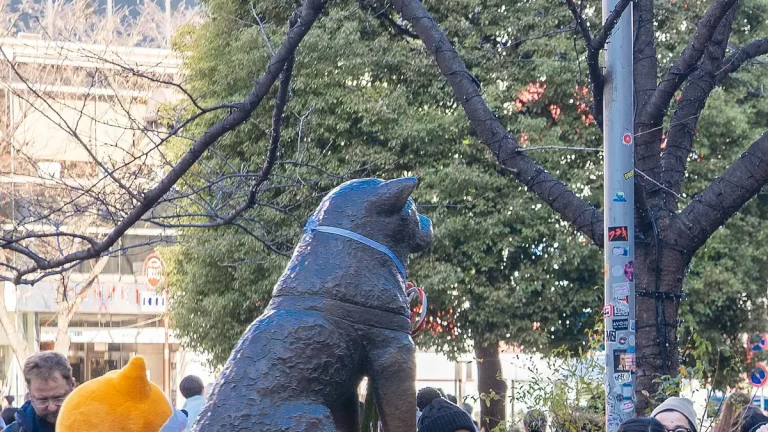
His statue still stands in Central Park, along the path north of the Tisch Children’s Zoo. Like Hachikō, the Akita who waited at Shibuya Station, Balto became a symbol bigger than the real dog. The 1995 animated film Balto, in which every character except Balto is invented, introduced him to another generation of children.
Test yourself: Balto quiz
Question 1 of 5
What disease broke out in Nome in 1925?
Diphtheria. The hospital’s antitoxin had expired, and no new supply could reach Nome by sea until spring.
Question 2 of 5
Where did the dog relay start?
Nenana. The serum came by train from Anchorage to Nenana, and the dog teams took it from there.
Question 3 of 5
Which dog ran the longest and most dangerous leg?
Togo. Led by Togo, Seppala’s team covered about 261 miles, including about 20 miles across the sea ice of Norton Sound.
Question 4 of 5
How long did the relay take?
About 5 and a half days. The serum reached Nome at 5:30 a.m. on February 2, 1925.
Question 5 of 5
Where is Balto’s body displayed today?
Cleveland Museum of Natural History. Togo is the one displayed at the Iditarod headquarters in Wasilla.
Sources
- Balto, Wikipedia
- 1925 serum run to Nome, Wikipedia
Featured image: Balto statue in Central Park, New York. Photo: Jim Henderson, public domain, via Wikimedia Commons (cropped).