Africa’s open grasslands support Earth’s richest concentration of large mammals and predators. Test your safari trivia, and read about lion pride dynamics in Africa.
Question 1 of 10
Why is a giraffe’s 18-inch tongue dark purple-black near the tip?
Dark melanin shields a giraffe’s tongue during hours of browsing high, sunlit acacia treetops.
Question 2 of 10
Which savanna mammal secretes a reddish oily ‘blood sweat’ that acts as natural sunscreen and antibiotic?
Hippos lack true sweat glands and secrete red and orange pigments that protect skin from UV rays and bacteria.
Question 3 of 10
Spotted hyenas are purely cowardly scavengers that never hunt live prey.
Myth. Spotted hyenas are skilled, cooperative hunters that kill the majority of their own food.
Question 4 of 10
Which tall, long-legged African bird hunts snakes and rodents by stomping them on open grasslands?
The secretarybird delivers lightning-fast kicks with a force several times its own body weight.
Question 5 of 10
In spotted hyena clans, which sex is larger and holds higher social rank?
Spotted hyena society is matriarchal; even the lowest-ranking female outranks adult immigrant males.
Question 6 of 10
Zebras have black skin underneath their striped black-and-white fur.
True. Embryo studies show zebras are fundamentally dark-skinned animals with white unpigmented stripes.
Question 7 of 10
Which fearless savanna mustelid is famous for raiding beehives and resisting cobra venom?
Loose, thick skin and partial venom resistance make honey badgers formidable fighters.
Question 8 of 10
Why do meerkats take turns standing upright on termite mounds while others forage?
Sentries bark distinct alarm calls for aerial raptors versus ground jackals, sending the mob diving into burrows.
Question 9 of 10
Hippos are among the deadliest large wild animals in Africa, capable of running faster than humans on land.
True. Despite weighing over 3,000 pounds, hippos can sprint near 19 mph (30 km/h) over short distances.
Question 10 of 10
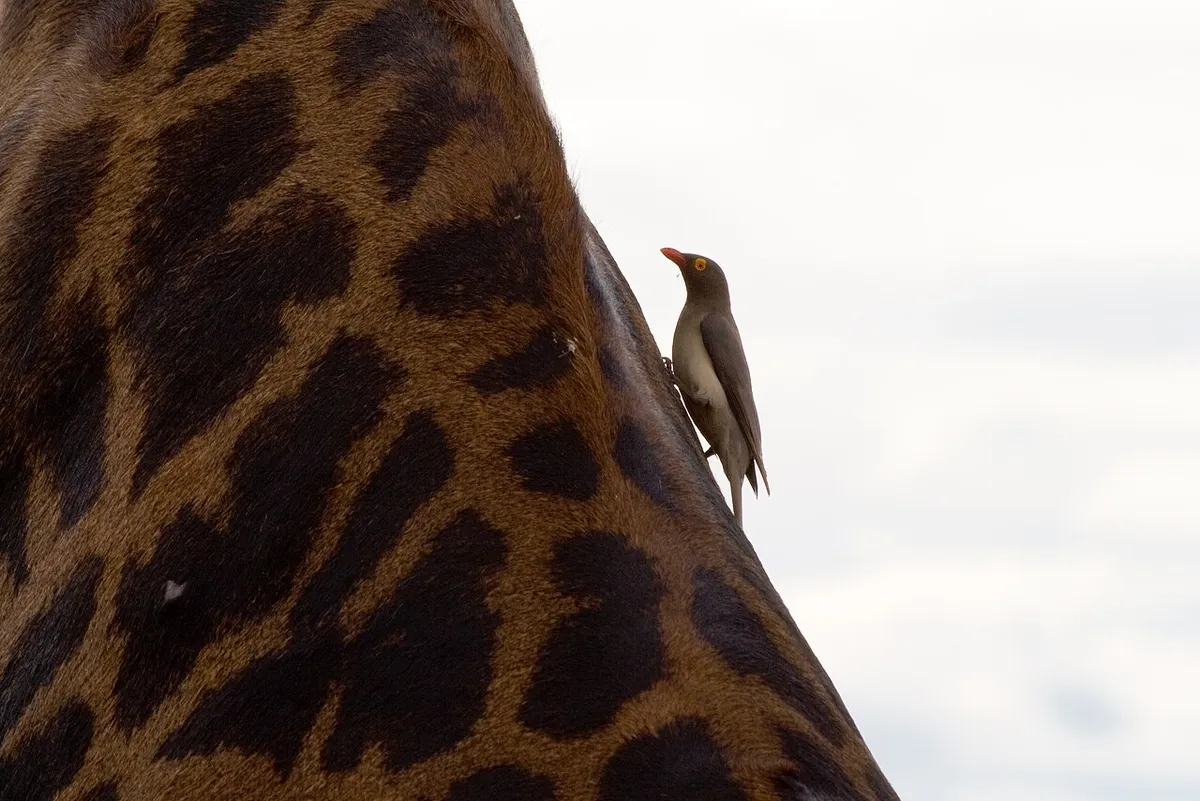
Which small African bird rides on giraffes, rhinos, and buffalo to eat ticks and warn of danger?
Oxpeckers groom parasites off host mammals and hiss loudly if predators approach.
Want more big-predator trivia? Try our Big Cats of the Wild Quiz.