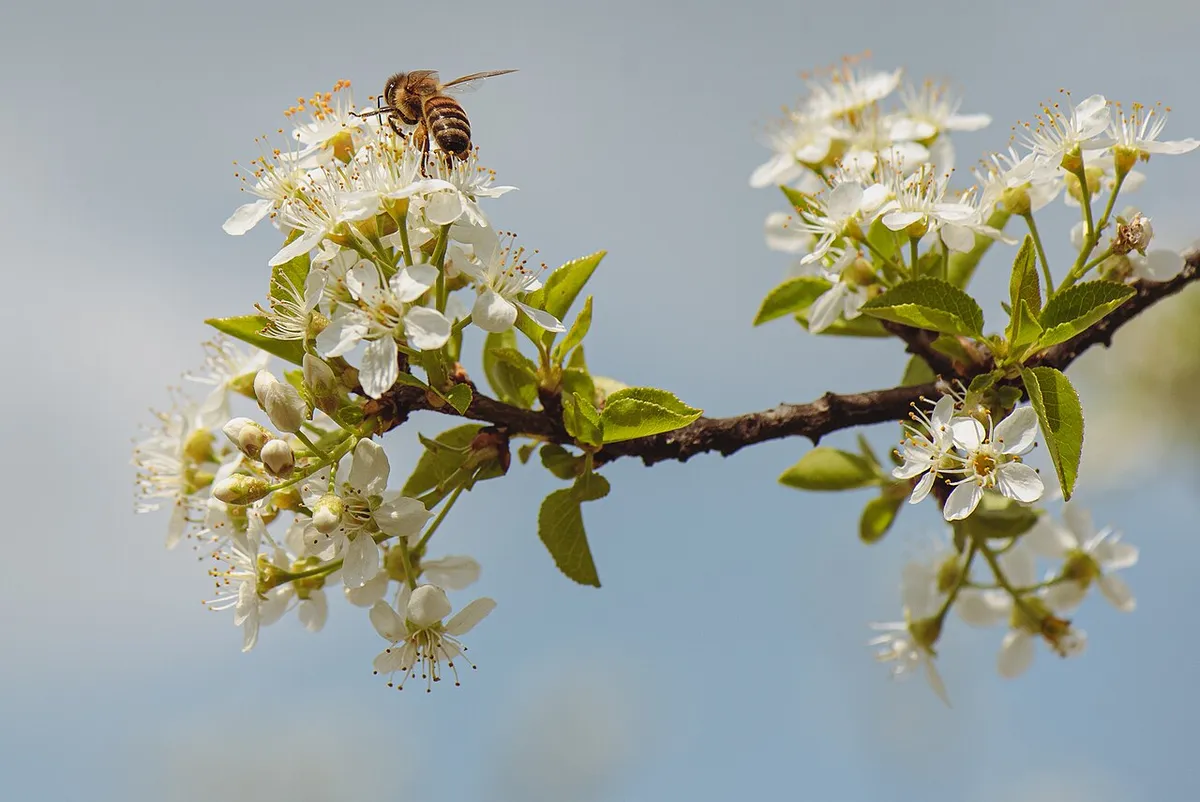
Without pollinators, most flowering plants and many food crops could not reproduce. Test your pollinator knowledge, and read about the most beneficial insects in the world.
Question 1 of 10
Honeybees are the only insects capable of pollinating crops and wildflowers.
False. Thousands of native solitary bees, bumblebees, hoverflies, beetles, butterflies, and moths are vital pollinators.
Question 2 of 10
What is ‘buzz pollination,’ famously performed by bumblebees on tomato and blueberry flowers?
Bumblebees grab the flower and vibrate at a specific frequency (sonication) to release trapped pollen.
Question 3 of 10
Which nocturnal mammals are essential pollinators for wild agave plants (used for tequila) and saguaro cacti?
Nectar-feeding bats (such as lesser long-nosed bats) visit agave and saguaro blossoms at night, dusting their faces with pollen.
Question 4 of 10
What flower color do hummingbirds—which lack a strong sense of smell—find especially attractive?
Hummingbirds have keen color vision in the red spectrum, so bird-pollinated tubular flowers are often vivid red or orange.
Question 5 of 10
Male honeybees (drones) gather most of the hive’s nectar and pollen.
Myth. Female worker bees perform all foraging, nursing, and hive maintenance; drones exist only to mate with a queen.
Question 6 of 10
Why do cacao trees (the source of chocolate) depend on tiny biting midges rather than honeybees?
Cacao blossoms are so small and hooded that tiny chocolate midges (Forcipomyia) are uniquely suited to pollinate them.
Question 7 of 10
Wind—not insects—pollinates corn, wheat, rice, and most grasses.
True. Cereal crops produce light, dry pollen designed to drift on breezes rather than stick to insects.
Question 8 of 10
What hidden pattern on many petals guides bees straight to nectar like runway lights?
Bees see ultraviolet wavelengths, revealing bulls-eye patterns on petals that point directly toward the nectar.
Question 9 of 10
Some orchids deceive male wasps by mimicking the shape and scent of a female wasp.
Fact. Pseudocopulation tricks male wasps into attempting to mate with the flower, transferring pollen in the process.
Question 10 of 10
Which Madagascar lemur is the world’s largest non-flying pollinator, spreading pollen for traveler’s palm trees?
Black-and-white ruffed lemurs pry open tough traveler’s palm bracts for nectar, dusting their snouts with pollen.
Love vibrant blooms? Play our Flowers Around the World Quiz next.