Whales and dolphins are intelligent ocean mammals with complex songs, hunting strategies, and record-breaking migrations. Test your cetacean knowledge, and explore our Ocean Life quiz next.
Question 1 of 10
Biologically speaking, an orca (killer whale) is actually the largest member of which family?
Orcas (Orcinus orca) are the largest species in the dolphin family, Delphinidae.
Question 2 of 10
What are baleen plates in humpback and blue whales made of?
Baleen is made of keratin—the same fibrous protein found in human hair and fingernails—and filters krill from seawater.
Question 3 of 10
Dolphins use gills to absorb small amounts of oxygen when diving deep.
False. Dolphins are air-breathing mammals with lungs and must surface to breathe through their blowhole.
Question 4 of 10
Which toothed whale has a long spiral tusk that is actually an overgrown tooth?
Male narwhals grow a spiral tusk up to 10 feet long from their upper left canine tooth, packed with sensory nerve endings.
Question 5 of 10
How do dolphins locate fish and obstacles in murky or dark water?
Dolphins emit rapid clicks through their melon and listen for returning echoes to map objects around them.
Question 6 of 10
Female humpback whales sing the loudest and longest complex songs.
Myth. Only male humpback whales sing the long, structured songs heard during breeding season.
Question 7 of 10
Which whale species has the largest brain of any animal ever known to live?
A sperm whale’s brain weighs around 17 pounds (7.8 kg)—the heaviest brain of any animal on Earth.
Question 8 of 10
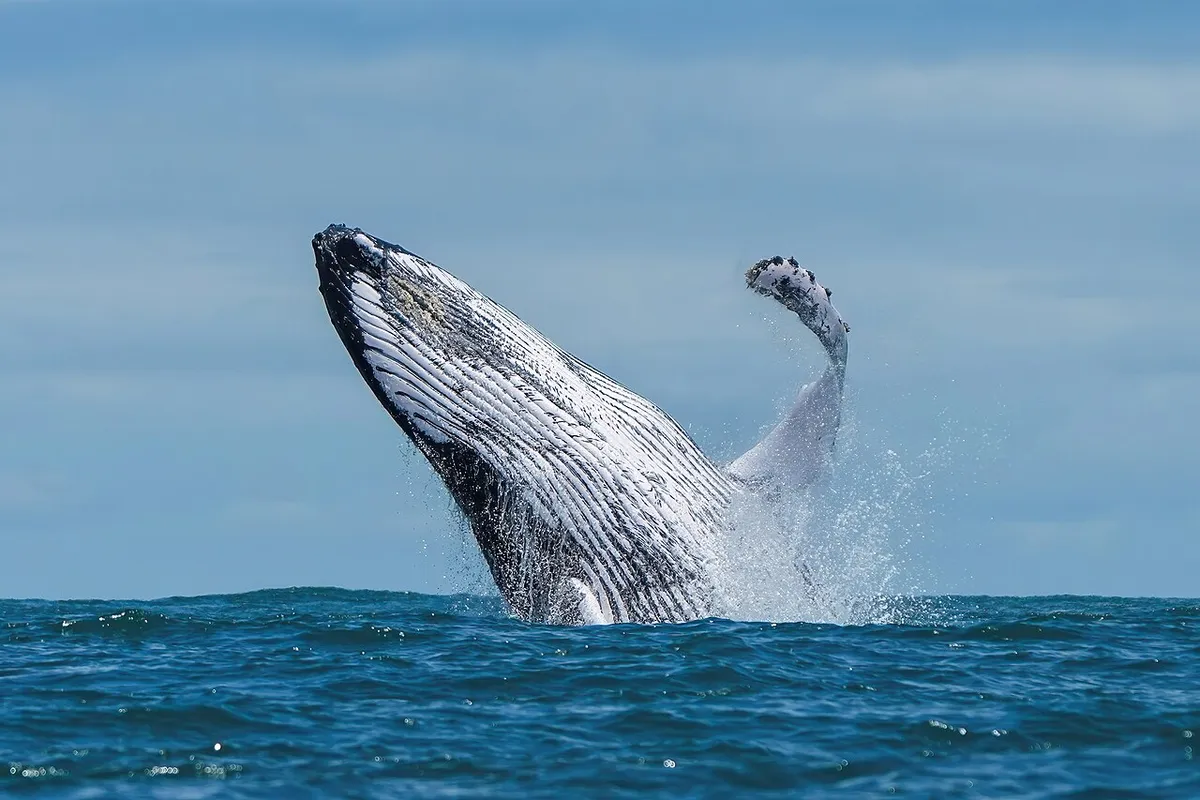
Why do whales often breach—leaping high out of the water and crashing back down?
Scientists observe that breaching helps whales signal across long distances, stun prey, play, or dislodge barnacles.
Question 9 of 10
Dolphins are social animals that often give each other unique ‘signature whistles’ like names.
True. Bottlenose dolphins develop individual signature whistles to identify and call specific companions.
Question 10 of 10
Which whale undertakes one of the longest mammal migrations, traveling between Arctic feeding grounds and Baja California lagoons?
Eastern North Pacific gray whales migrate roughly 10,000–12,000 miles round-trip every year.
Curious about other aquatic wildlife? Read our guide to the largest freshwater fish species.