In an unexpected astrophysical discovery, an international team of astronomers has identified a colossal exoplanet candidate orbiting within the habitable zone of an exceptionally hot, massive star. Designated HD 156295 b, this super-Jupiter boasts an estimated mass roughly six times greater than Jupiter and orbits its host star at a distance comparable to Earth’s orbit around the Sun.
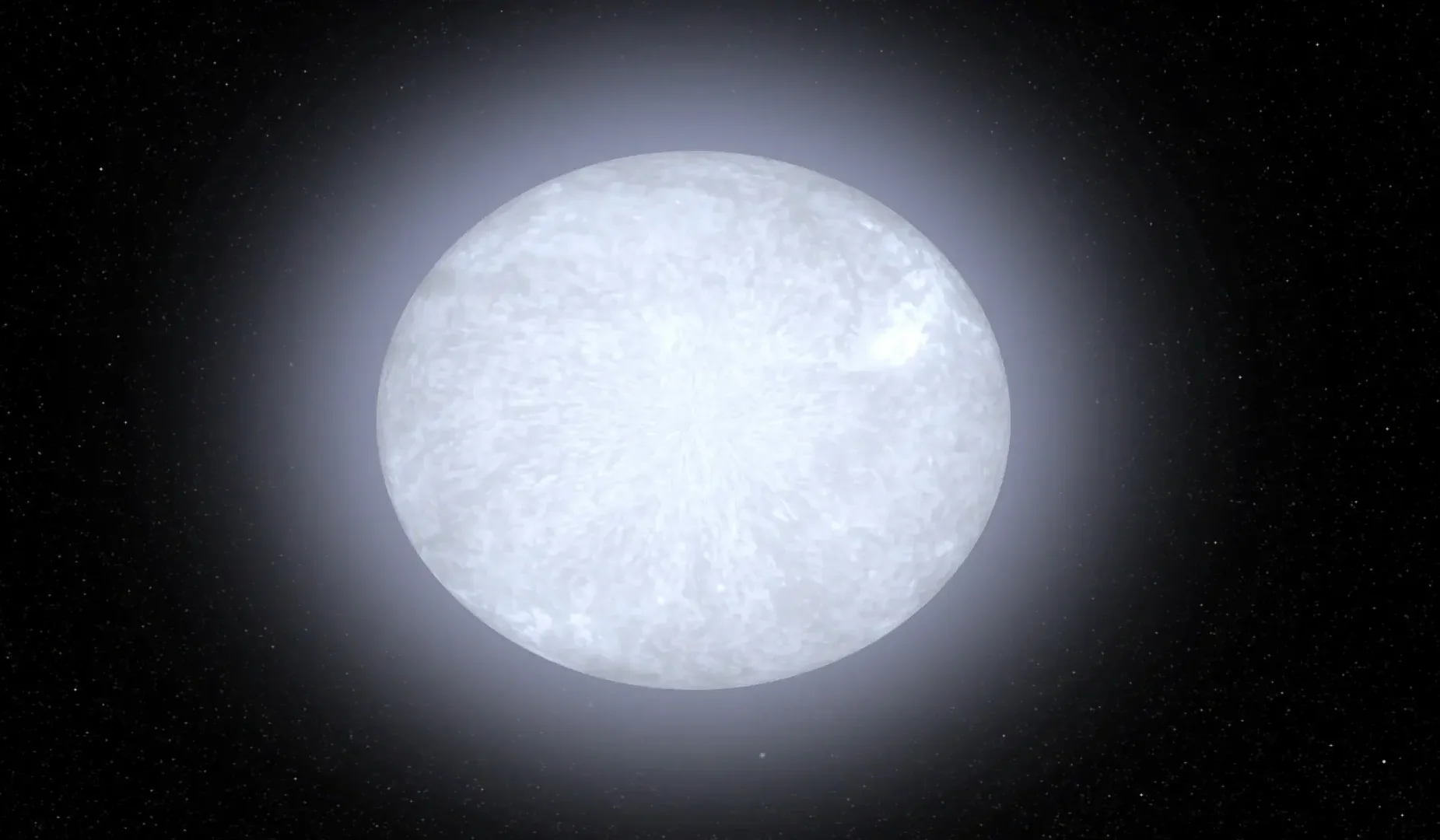
What makes this system extraordinary is the host star itself: an energetic, early-type star significantly hotter and more luminous than our Sun. If confirmed, HD 156295 would represent the hottest host star known to harbor a planet within its habitable zone, fundamentally expanding our understanding of where planets can form and maintain liquid-water equilibrium temperatures.
Pushing the Boundaries of Exoplanet Detection
The candidate was detected through high-precision radial velocity measurements combined with archival transit surveys. Historically, planet-hunting missions like Kepler and TESS focused predominantly on cooler, long-lived red dwarf (M-type) and solar-type (G-type) stars. Hotter stars (A-type and early F-type) rotate rapidly and possess fewer sharp spectral absorption lines, making Doppler wobble detection technically challenging.
By applying specialized cross-correlation velocity templates, astronomers detected a clear, periodic orbital signal around HD 156295. Because the star is vastly more luminous than our Sun, its habitable zone—the orbital envelope where an Earth-like planet would receive the ideal amount of radiation for surface liquid water—is pushed significantly outward. Remarkably, HD 156295 b sits squarely inside this temperate corridor.
Could Life Exist on Moons of Giant Worlds?
As a gas giant six times the mass of Jupiter, HD 156295 b lacks a solid surface and consists predominantly of turbulent hydrogen and helium envelopes surrounding a high-pressure core. However, astrobiologists are fascinated by the prospect of exomoons. If HD 156295 b possesses large rocky moons similar to Jupiter’s Galilean satellites or Saturn’s Titan, those worlds could experience temperate surface conditions, shielding atmospheres, and abundant liquid water.
Similar to enigmatic worlds like the free-floating rogue planets discovered across deep space, extreme giant exoplanets showcase the staggering diversity of planetary architectures. Follow-up observations scheduled with the James Webb Space Telescope and next-generation ground observatories will seek to confirm the planet’s transit signature and characterize its atmospheric composition.