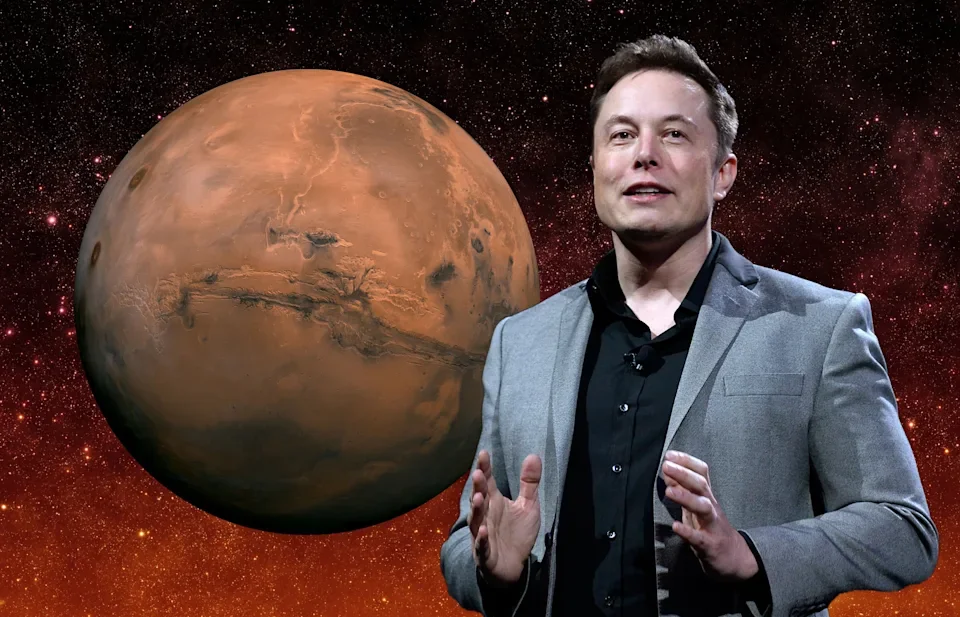
Elon Musk’s audacious vision of transforming Mars into a self-sustaining second home for humanity has captured global imagination. Through SpaceX’s colossal Starship launch system, Musk envisions establishing cities of a million people on the Red Planet and eventually terraforming its arid landscape into a lush, Earth-like biosphere. However, planetary scientists, astrobiologists, and geophysicists increasingly emphasize that turning the Red Planet into Earth 2.0 faces severe physical and geological barriers that may prove insurmountable with known physics.
In his authoritative book Life on Mars: What to Know Before We Go, Professor David A. Weintraub of Vanderbilt University examines the stark disconnect between technological ambition and harsh planetary realities, warning that the environmental hazards of Mars could turn interplanetary colonization into an agonizing struggle for survival.
The Deadly Absence of a Global Magnetic Shield
Unlike Earth, which boasts a churning liquid iron outer core generating a powerful magnetosphere, Mars lost its global dynamo more than 4 billion years ago as its smaller mantle cooled rapidly. Without a protective magnetic bubble, the Martian surface is bombarded continuously by lethal galactic cosmic rays (GCRs) and high-energy solar particle events.
On Earth, the magnetosphere and thick atmosphere absorb almost all harmful cosmic radiation, keeping background exposure around 3 to 4 millisieverts per year. On Mars, unprotected astronauts would absorb hundreds of times that dose—enough to induce cognitive decline, severe cataracts, and fatal cancers within a few years. For any realistic settlement, human beings would be forced to live entirely underground in buried volcanic lava tubes, never gazing upon open skies without heavy artificial shielding.
The Myth of Atmospheric Restoration
A core pillar of terraforming concepts involves warming the Martian polar caps with thermonuclear detonations or orbital mirrors to vaporize trapped carbon dioxide, triggering a runaway greenhouse effect. Yet comprehensive surveys by NASA’s Mars Atmosphere and Volatile Evolution (MAVEN) orbiter revealed that Mars simply does not possess enough accessible CO2. Even if every polar deposit and mineral grain were completely liberated, the total atmospheric pressure would rise to only a fraction of Earth’s sea-level pressure—far below the threshold required to prevent water from instantly boiling or freezing.
Furthermore, without a global magnetic field, the solar wind would continuously strip newly liberated gases into space. While scientists searching for extraterrestrial life look with growing excitement toward icy ocean worlds, such as the breakthrough discovery that Saturn’s moon Enceladus may harbor life beneath its frozen shell, establishing open-air biospheres on Mars remains constrained by the immutable laws of planetary thermodynamics.

Reconciling these harsh facts does not diminish the marvel of robotic exploration or targeted scientific bases, but it firmly establishes that Earth remains humanity’s only true cosmic haven.