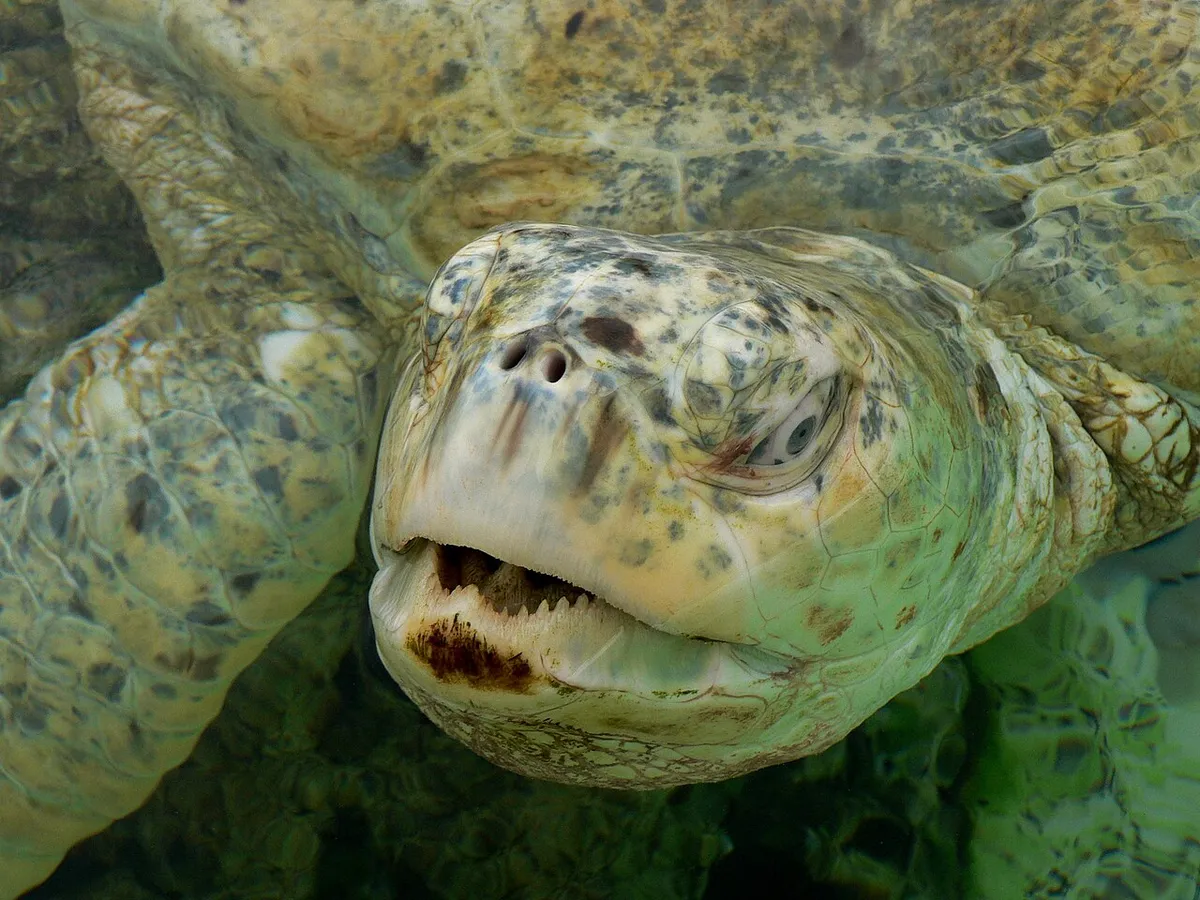
Turtles and crocodilians are living relics from the age of dinosaurs. Test how well you know these armored reptiles, and check out our Reptiles & Amphibians Myth or Fact quiz.
Question 1 of 10
Which visual clue best helps distinguish an American alligator from a Nile or saltwater crocodile when its mouth is closed?
Crocodiles have narrower V-shaped snouts and an exposed lower fourth tooth; alligators have wider U-shaped snouts.
Question 2 of 10
Which sea turtle species is the largest of all living turtles and has a flexible, leathery shell instead of hard scutes?
Leatherback sea turtles can weigh over 1,500 pounds and dive deeper than 3,000 feet hunting jellyfish.
Question 3 of 10
Galapagos giant tortoises can survive for months without food or water thanks to slow metabolism and stored water.
True. Giant tortoises can live well over 100 years and endure long dry seasons with minimal intake.
Question 4 of 10
Why do crocodiles and alligators sometimes rest on riverbanks with their mouths wide open?
Because reptiles cannot sweat, gaping releases excess body heat through the moist lining of the mouth.
Question 5 of 10
Tortoises are generally land-dwelling plant eaters with domed shells, whereas most turtles spend much of their time in water.
True. While all tortoises belong to the turtle order Testudines, ‘tortoise’ usually refers to terrestrial species with sturdy elephant-like feet.
Question 6 of 10
How do crocodilians care for their newly hatched young?
Unlike most reptiles, crocodilian mothers respond to chirps from inside eggs, dig open the nest, and guard babies for months.
Question 7 of 10
What is the ‘death roll’ used by crocodiles?
Since crocodilians cannot chew, spinning their bodies rips manageable chunks off large prey.
Question 8 of 10
Sea turtles can pull their heads and flippers completely inside their shells like box turtles.
Myth. Sea turtles’ streamlined shells cannot retract their heads or paddle-like flippers, trading defense for swimming speed.
Question 9 of 10
Which slender-snouted crocodilian native to India and Nepal feeds almost exclusively on fish?
The critically endangered gharial has needle-like teeth along a narrow snout ideal for snapping up fish.
Question 10 of 10
What happens to a crocodile’s teeth when they wear down or break off?
A crocodile can cycle through thousands of replacement teeth over its lifetime.
Want more ocean wildlife facts? Explore our Ocean Life quiz.