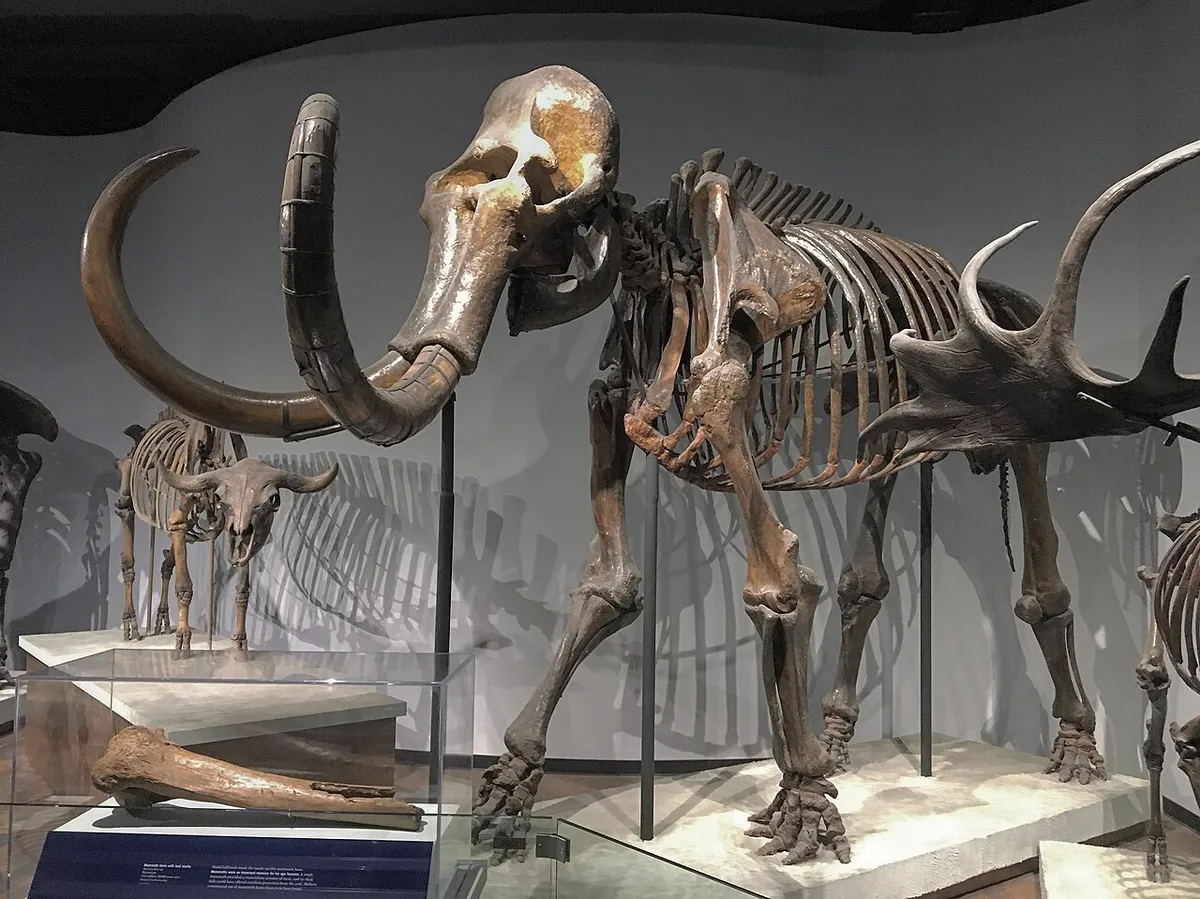
During the Pleistocene Ice Age, giant mammals roamed frozen steppes and temperate forests. Test your Ice Age trivia, and explore our Fossils and Prehistoric Earth Quiz.
Question 1 of 10
Which living elephant species is more closely related genetically to the extinct woolly mammoth?
DNA studies show woolly mammoths and Asian elephants share a more recent common ancestor than either does with African elephants.
Question 2 of 10
What land bridge connected Siberia and Alaska during Ice Age low sea levels, letting mammoths and humans cross?
With vast ocean water locked in ice sheets, Beringia exposed a wide, grassy steppe between Asia and North America.
Question 3 of 10
Every single woolly mammoth went extinct over 100,000 years ago.
Myth. An isolated population of woolly mammoths survived on Wrangel Island in the Arctic Ocean until roughly 4,000 years ago.
Question 4 of 10
Which Ice Age predator—Smilodon—is famous for its 7-inch serrated upper canine teeth?
Smilodon used stocky, muscular forelimbs to pin prey before delivering a precise throat bite.
Question 5 of 10
Why were Ice Age giant ground sloths like Megatherium so different from today’s tree sloths?
Megatherium could stand up to 20 feet tall on hind legs to pull down high branches.
Question 6 of 10
What did glyptodonts—giant Ice Age mammals of South America—look like?
Relatives of modern armadillos, glyptodonts wore domed bony shells and some swung spiked tail clubs.
Question 7 of 10
Musk oxen lived alongside woolly mammoths during the Ice Age and still survive in the Arctic today.
True. Musk oxen are one of the few large Pleistocene tundra mammals that weathered both climate shifts and human expansion.
Question 8 of 10
What was the ‘Irish elk’ (Megaloceros giganteus), famous for antlers spanning up to 12 feet across?
Despite the name, Megaloceros ranged across Europe and Asia and was neither strictly Irish nor a true elk.
Question 9 of 10
Permafrost in Siberia and Alaska has preserved frozen woolly mammoth hair, skin, and even stomach contents.
True. Frozen mummies like baby mammoth Lyuba give scientists rare insight into Ice Age diets and DNA.
Question 10 of 10
Which large extinct Ice Age flightless bird of New Zealand stood up to 12 feet tall before vanishing after human arrival?
Giant moa had no wings at all—not even vestigial wing bones—and were hunted by the Haast’s eagle.
Curious about living Arctic survivors? Play our Arctic Wildlife and Survival Quiz.