Life above the Arctic Circle endures months of darkness, freezing winds, and shifting sea ice. Test your Arctic survival trivia, and explore our Polar Regions and Glaciers Quiz.
Question 1 of 10
How do musk oxen defend their calves when threatened by a pack of Arctic wolves?
Adults lock shoulder-to-shoulder in a defensive circle with curved horns facing outward and calves sheltered inside.
Question 2 of 10
What is the long spiral tusk of a male narwhal actually made from?
A male narwhal’s upper left canine tooth spirals forward up to 10 feet and senses water temperature and salinity.
Question 3 of 10
Arctic penguins gather in huge colonies on Greenland’s sea ice.
Myth. Penguins live naturally in the Southern Hemisphere; none inhabit the Arctic.
Question 4 of 10
How do caribou (reindeer) eyes adapt to the extreme shift from bright Arctic summer to dark winter?
In winter, the reflective tapetum lucidum turns deep blue, increasing light sensitivity by over a thousand times.
Question 5 of 10
Which large marine mammal relies on its long ivory tusks to haul itself onto ice floes and establish social rank?
Both male and female walruses use tusks to pull their 2,000-pound bodies out of icy water and chip breathing holes.
Question 6 of 10
Both male and female reindeer (caribou) grow antlers—unlike most other deer species.
True. Pregnant females keep their antlers through winter to defend snow craters dug for lichen.
Question 7 of 10
Which small white Arctic whale lacks a dorsal fin so it can swim smoothly underneath pack ice?
Instead of a tall dorsal fin that would scrape ice, belugas have a tough dorsal ridge.
Question 8 of 10
Why do ptarmigans—chicken-sized Arctic birds—turn pure white in winter and feather their toes?
Feathered feet act like natural snowshoes while white plumage hides ptarmigans against snowdrifts.
Question 9 of 10
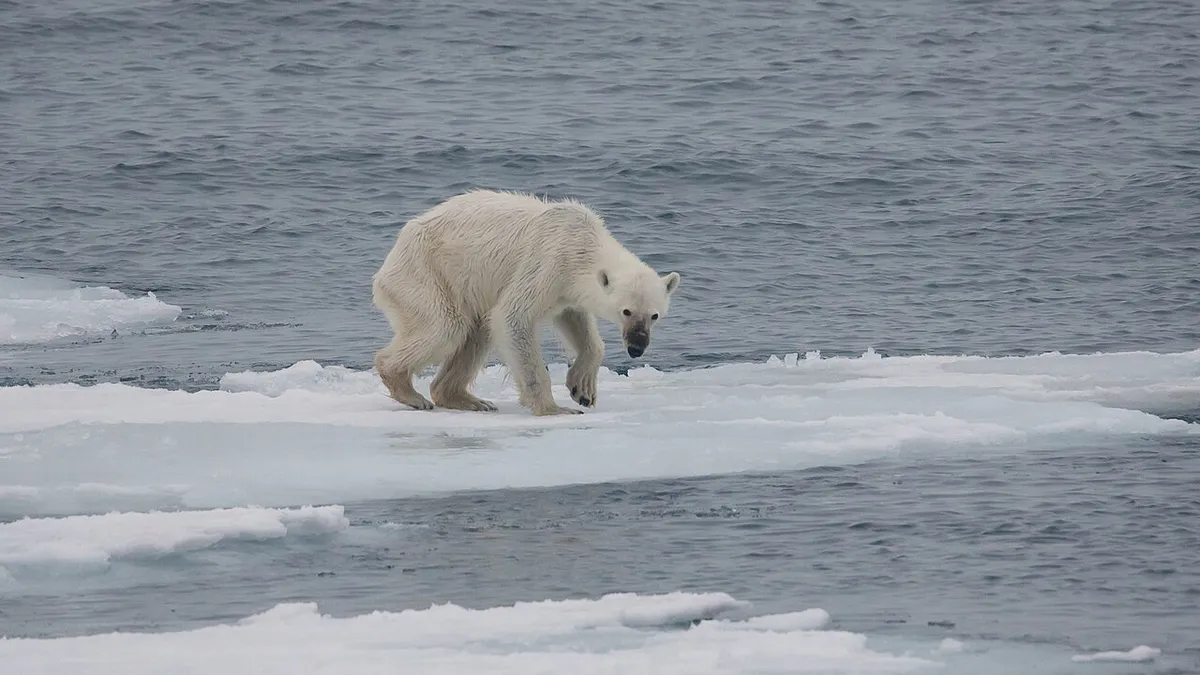
Polar bears rely on thick fat (blubber) and hollow insulating fur to stay warm—even overheating when they run.
True. Their insulation is so effective that polar bears usually walk slowly to avoid overheating.
Question 10 of 10
Which Arctic seal keeps breathing holes open in thick sea ice using sharp claws on its front flippers?
Ringed seals are the primary prey of polar bears and maintain multiple breathing holes under snow lairs.
Want more cold-weather wildlife facts? Play our Bears Around the World Quiz.