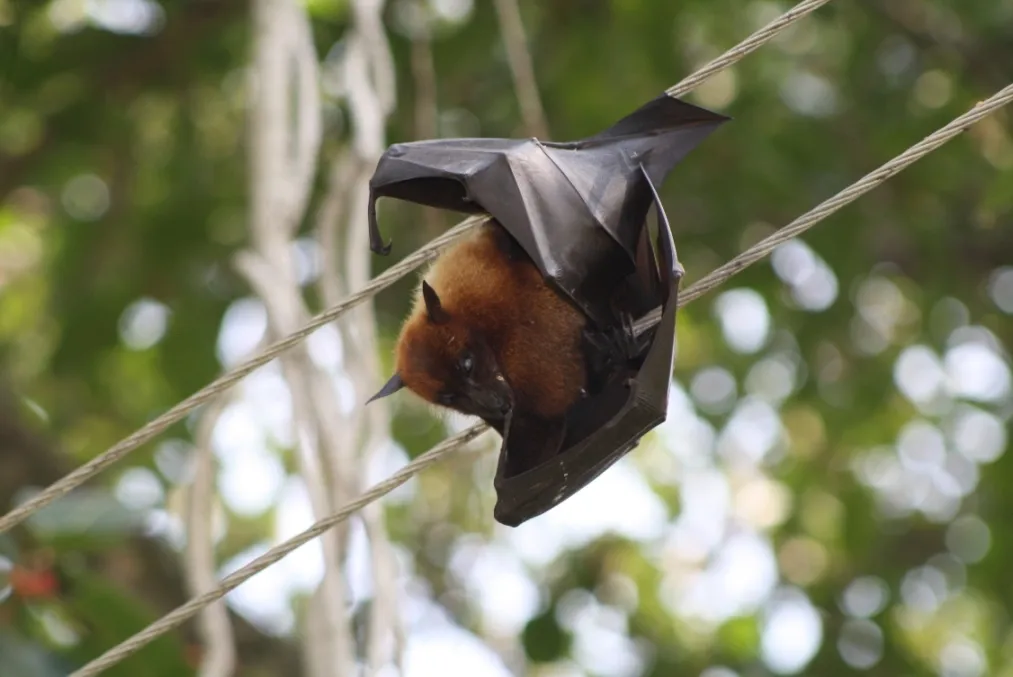
With over 1,400 species, bats make up roughly a fifth of all mammal species and keep ecosystems healthy. Separate bat folklore from science, and try our Nocturnal Animals Quiz.
Question 1 of 10
Bats are completely blind and cannot see anything with their eyes.
Myth. All bats can see, and large fruit bats (flying foxes) rely heavily on sharp eyesight.
Question 2 of 10
Bats are the only mammals capable of true, powered flight.
Fact. Flying squirrels only glide, whereas bats flap elongated finger-supported wings.
Question 3 of 10
Most bat species around the world feed on blood.
Myth. Only three vampire bat species in the Americas drink blood; most bats eat insects, fruit, or nectar.
Question 4 of 10
Bats often tangle themselves inside human hair on purpose.
Myth. Echolocation is precise enough to avoid human hair; swooping bats are usually chasing mosquitoes nearby.
Question 5 of 10
Vampire bats actually lap blood from a tiny nick rather than sucking it like a straw.
Fact. Anticoagulants in their saliva keep blood flowing from a small scratch while they lap it up.
Question 6 of 10
A single small insect-eating bat can catch hundreds of mosquitoes and moths in an hour.
Fact. Insectivorous bats save farmers billions of dollars yearly in natural pest control.
Question 7 of 10
Bats are closely related to mice and rats—basically flying rodents.
Myth. Bats belong to the order Chiroptera and are not rodents; they usually have just one pup per year.
Question 8 of 10
Why do bats hang upside down when sleeping?
Gravity locks a bat’s foot tendons closed effortlessly, and letting go launches it immediately into flight.
Question 9 of 10
Which bat species is the world’s smallest mammal by skull size, weighing less than a penny?
Kitti’s hog-nosed (bumblebee) bat of Thailand and Myanmar measures only about 1.2 inches long.
Question 10 of 10
Where does the world’s largest urban bat colony—roughly 1.5 million Mexican free-tailed bats—emerge each summer evening?
Thousands of visitors gather in Austin, Texas, to watch the Congress Avenue Bridge bats stream out at dusk.
Want more night-pollinator trivia? Play our Pollinators in Nature Quiz.