Hoofed mammals (ungulates) include the tallest, fastest, and most numerous large herbivores on Earth. Test your ungulate trivia, and explore our African Savanna Wildlife Quiz.
Question 1 of 10
What is the key difference between true horns (on cattle and antelope) and antlers (on deer and elk)?
True horns have a permanent bone core covered in keratin, whereas bony antlers are shed and regrown annually.
Question 2 of 10
Which shy forest animal of the Congo rainforest is the giraffe’s closest living relative?
Despite zebra-like striped legs, the okapi shares the giraffe’s skull shape, long tongue, and family Giraffidae.
Question 3 of 10
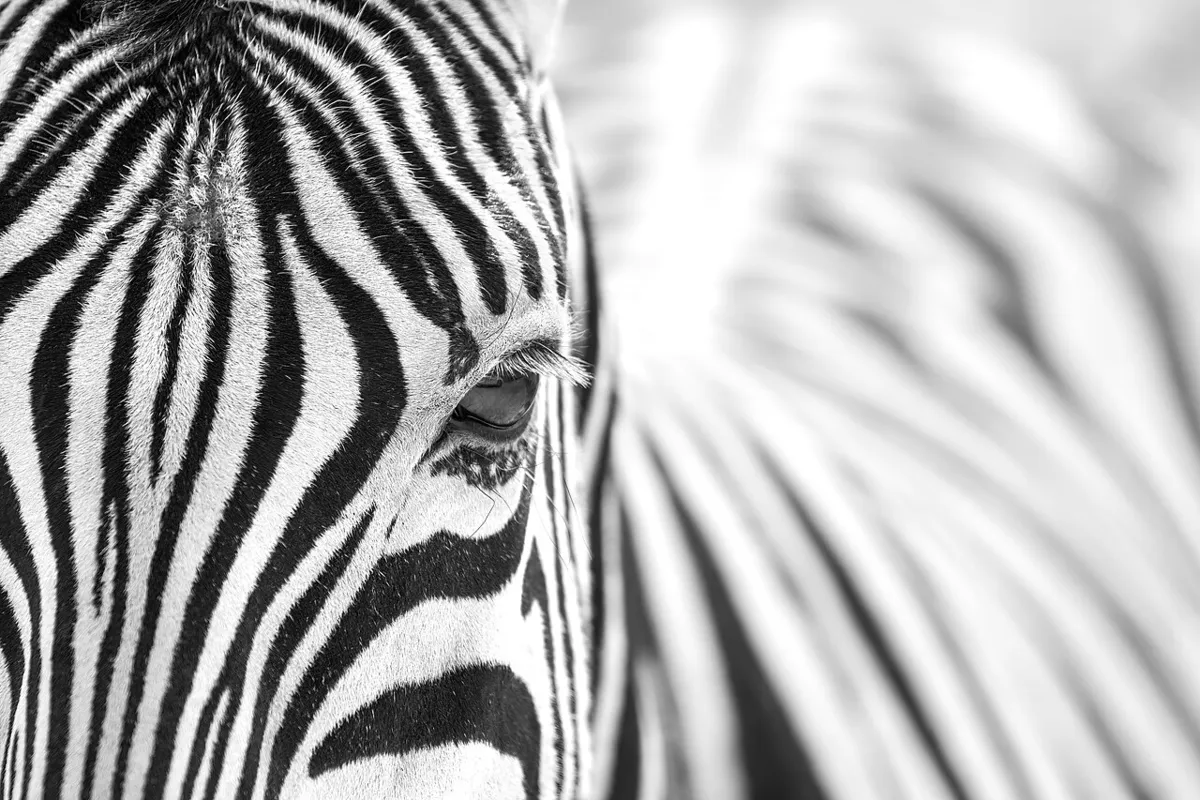
Every zebra’s stripe pattern is unique, and research suggests stripes also help deter biting horseflies.
True. Experiments show biting flies struggle to land smoothly on high-contrast zebra stripes.
Question 4 of 10
Which North American hoofed mammal is the second-fastest land animal on Earth—and can sustain 35+ mph for miles?
Built with oversized lungs and heart, the pronghorn outruns any living North American predator.
Question 5 of 10
Giraffes have far more neck bones than humans do.
Myth. Giraffes have 7 neck vertebrae—the exact same count as humans, mice, and whales—just hugely elongated.
Question 6 of 10
How do wild mountain goats stay balanced on near-vertical rocky cliffs?
Cloven hooves spread wide with rough, traction-gripping pads and sharp dewclaws for tiny rock ledges.
Question 7 of 10
Which tiny East African antelope is only about 12–16 inches tall at the shoulder?
Named for the female’s alarm whistle, dik-diks are among the smallest antelopes in the world.
Question 8 of 10
How do giraffes sleep safely in the wild while watching for lions?
Wild giraffes sleep very little—often 30 minutes to 2 hours total per day in short standing or curled-neck naps.
Question 9 of 10
Bison and American buffalo are biologically the exact same species as African Cape buffalo.
False. North American bison (Bison bison) belong to a different genus from African Cape buffalo and Asian water buffalo.
Question 10 of 10
Which spiral-horned desert antelope can survive for months without drinking water by absorbing moisture from plants?
The critically endangered addax of the Sahara turns pale in summer to reflect desert heat.
Want more migration facts? Try our Epic Animal Migrations Quiz.