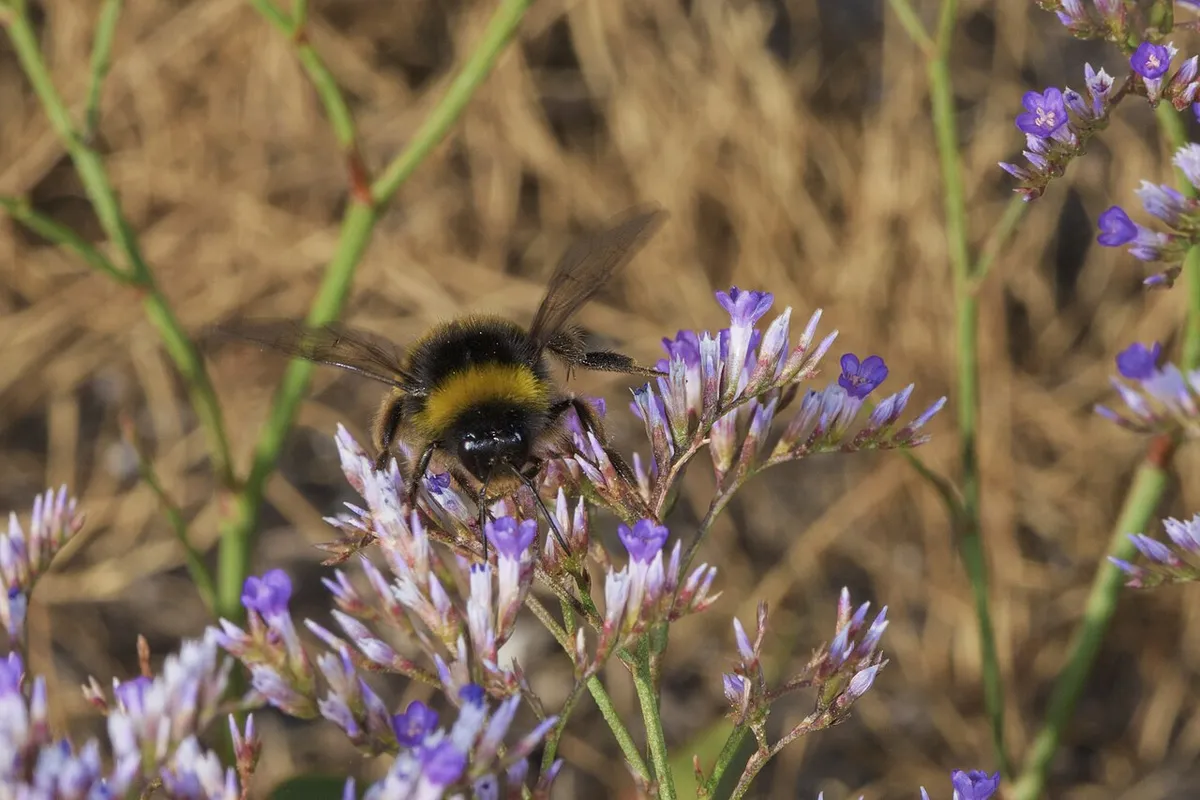
Social insects build towering nests, farm fungi, and coordinate thousands of workers without a single boss. Test your hymenopteran trivia, and explore our Extreme Insects Trivia quiz.
Question 1 of 10
Why do leafcutter ants cut thousands of fresh leaf pieces and carry them underground?
Leafcutter ants chew leaves into pulp to cultivate a specialized fungus that feeds the entire colony.
Question 2 of 10
What happens to a female honeybee worker’s barbed stinger after she stings human skin?
Barbs anchor in elastic mammal skin, tearing the venom sac free and fatally injuring the worker honeybee—unlike wasps.
Question 3 of 10
Wasps and bumblebees have smooth stingers and can sting multiple times without dying.
True. Smooth stingers retract cleanly after stinging.
Question 4 of 10
How do paper wasps build their umbrella-shaped gray nests?
Wasps scrape weathered wood fibers and mix them with saliva to form lightweight paper cells.
Question 5 of 10
In a honeybee colony, how do workers communicate the direction and distance to rich flower patches?
The angle of the waggle run relative to gravity encodes direction from the Sun, and duration encodes distance.
Question 6 of 10
All bee species live in large hives with a queen and produce honey.
Myth. Most of the world’s ~20,000 bee species are solitary, nesting alone in soil tunnels or hollow stems without making honey.
Question 7 of 10
Which insect group has the highest total biomass among terrestrial arthropods—with trillions of individuals?
Ants inhabit every continent except Antarctica and turn over vast amounts of soil.
Question 8 of 10
How do honeybees keep their hive warm during freezing winter months?
Workers form a tight winter cluster around the queen and vibrate their wing muscles to generate heat.
Question 9 of 10
In ant colonies, almost all foraging workers and soldiers are female.
True. Female workers handle foraging, brood care, and defense, while winged males appear briefly for mating flights.
Question 10 of 10
Which South American ant delivers one of the most painful insect stings on the Schmidt pain index?
Paraponera clavata is named the bullet ant because its neurotoxic sting causes hours of intense throbbing pain.
Want more pollinator facts? Try our Pollinators in Nature Quiz.